



Water intrusion almost always starts where the roof meets the wall; uncoordinated trades and missing or incorrect flashing cause the majority of leaks and expensive rework. This guide shows building owners and facility managers how to schedule and execute siding service alongside roof waterproofing to stop leaks, reduce rework, and preserve warranties. You will get a clear sequencing plan, a technical roof-to-wall checklist with product examples, sample contract hold points, and practical inspection and temporary protection tactics to require from contractors.
Why coordinating siding service and roof waterproofing matters for leak prevention
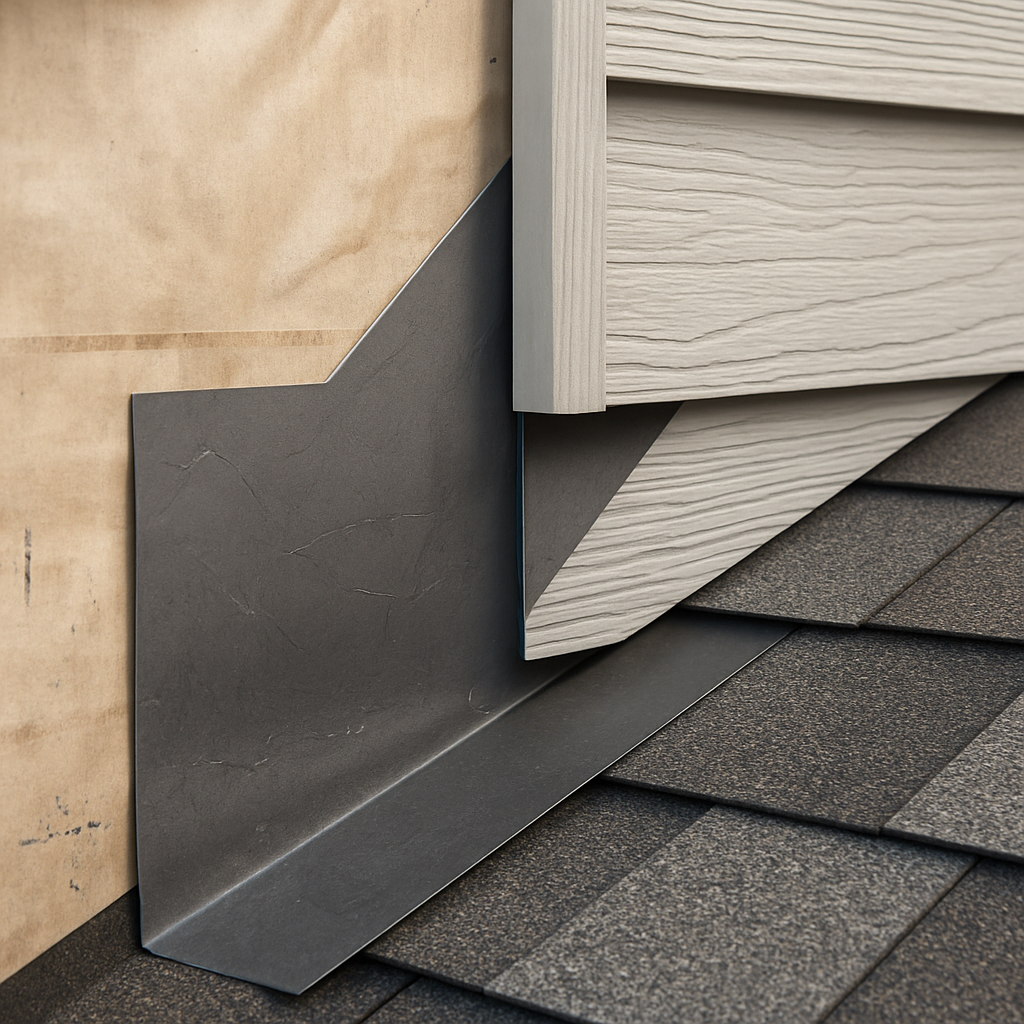
Direct point: most durable leaks are created where two trades meet and each assumes the other has completed a detail. Continuity of the water resistive barrier and correctly sequenced flashing are the operational items that separate a leak-free job from long-term trouble. The technical guidance from bodies like NRCA and the International Code Council highlights that these are not cosmetic issues – they are code and warranty level details.
Common failure mechanisms that coordination eliminates
- Reversed laps: siding WRB installed with laps that shed water into rather than away from the roof flashings
- Missing step flashing: siding removed or replaced without installing step flashing behind each course of siding
- Fastener breaches: siding fasteners driven through WRB or secondary membranes at the roof edge without proper sealing
- Gutter and overflow interactions: new siding traps water or changes drainage lines, increasing exposure at roof-wall intersections
- Material incompatibility: dissimilar metals or sealants that fail at vertical transitions
Practical tradeoff: complete roof waterproofing first gives the best inspection window for final roof terminations, but it can increase schedule risk because some coatings and membranes require cure periods or temperature windows before siding crews can work adjacent to them. In practice I recommend roof waterproofing and final flashings be completed and documented, then allow the minimum manufacturer cure or exposure time before siding installers close the vertical joint – this costs a little time up front but prevents costly rework and interior claims.
Concrete example: on a 48 unit multifamily rehab the siding crew stripped cladding and exposed the roof edge. The roofing contractor finished a self adhered base flashing and applied a liquid waterproofing at parapet terminations. Because both trades followed a coordinated sequence and produced photographic sign-offs, crews avoided replacing damaged framing and the owner preserved a roof membrane warranty. RoofWaterproofing.us coordinated the handoff, supplied membrane adhesion test results, and the siding contractor tied their WRB laps over the verified flashings.
Judgment call: owners who prioritize speed over integrated sequencing often pay more later. Quick overlays or isolated siding replacements that ignore roof waterproofing details create concealed failure points that surface after warranty windows close. Require manufacturer approved installers and written hold points to avoid this routine mistake.
Next consideration: schedule a joint preconstruction walk with roofing and siding leads, set two concealment hold points, and document required cure times in the schedule so neither trade is surprised.
Recommended sequencing and scheduling for combined projects
Direct prescription: sequence work so the roof membrane and all visible roof terminations are completed, inspected, and documented before siding installers close vertical joints. This preserves access to flashing details and makes WRB laps testable before concealment.
Hold-point oriented sequence
- Condition scan and record: perform a preconstruction moisture scan, photos of existing terminations, and order long-lead flashing materials.
- Roof field and perimeter membrane: install primary membrane, base flashings, and through-wall flashing where required – do not install counterflashing that conceals the vertical termination yet.
- Hold point 1 – roof termination sign-off: require photographic evidence, membrane adhesion results, and one of the moisture checks listed in the QA section before siding work proceeds.
- Temporary protection and cure window: apply required temporary covers, then allow manufacturer specified cure or dwell time for coatings or adhesives.
- WRB tie-in and vertical flashings by siding trade: siding contractor installs WRB laps over verified roof flashings, installs step flashing or peel-and-stick vertical flashings as specified.
- Hold point 2 – concealment sign-off: verify WRB continuity, fastener practice, and perform moisture meter checks at critical studs before siding cladding is closed.
- Final inspections and punch list: third party or manufacturer witness if required for warranty closure, then final clean up and project handoff.
| Project scale | Typical duration | Critical scheduling drivers |
|---|---|---|
| Small residential roof + siding | 3 – 5 days | Cure time for roof coating, single crew coordination, simple flashing |
| Medium commercial storefront & low slope roof | 2 – 3 weeks | Membrane curing, custom metal counterflashing, permit inspections |
| Larger multifamily retrofit | 4 – 8 weeks | Phased access, extensive moisture remediation, manufacturer witness requirements |
Practical tradeoff: accelerating schedules by overlapping trades reduces calendar time but increases risk that flashings get hidden before defects are caught. In practice, budget one to two hold point days per roof-wall interface for inspection and documentation – this lowers rework by more than the added schedule cost on most projects.
- Weather and product limits: plan around minimum temperature and humidity windows in product data sheets; some liquid-applied membranes need 48 to 72 hours of dry weather before adjacent siding work should occur.
- Material lead times: custom metal flashings and color-matched trim often drive start dates more than crew availability – order early.
- Crew idle cost vs rework risk: If siding crews are costly to idle, plan short buffer windows and a clear contingency for moisture remediation to avoid a forced rush that creates future leaks.
Concrete example: on a 12-unit townhouse rehab the owner scheduled roof waterproofing first and specified a 72 hour cure plus Hold point 1 photographic sign-off. The siding contractor began WRB tie-in on day 5 with documented moisture meter readings; a minor adhesion issue was caught and corrected before siding closure, avoiding a multiunit interior damage claim.
Hold point to require: photographic sign-off of roof terminations, written cure time confirmation from the roofing applicator, and a moisture reading at each exposed stud line before siding closure.
Technical interface checklist for roof to wall connections
Ownership first: assign clear responsibility for each flashing and WRB tie in before crews arrive. Without an explicit owner for vertical terminations, installers assume the other trade will complete the detail and critical flashings get omitted or improperly lapped.
Pre-install verification
- Substrate and moisture check: document cavity and sheathing moisture with meter readings. Do not close vertical joints if sheathing reads above 16% unless a remediation plan is written.
- Material compatibility: confirm sealant, flashing, and siding materials are chemically compatible and meet local code. See the Vinyl Siding Institute guidance at Vinyl Siding Institute for vinyl-specific recommendations.
- Termination heights and back pans: verify parapet and wall heights allow for proper counterflashing and through-wall flashing; order through-wall flashings and drip edges early.
- Damage inventory: photograph and tag any rotten framing or deteriorated sheathing so repairs are budgeted before WRB closure.
- Secondary protection ready: have self adhered membranes, peel-and-stick vertical flashing, and compatible primers on site before removing existing cladding.
During install – the must pass technical items
- Continuous WRB laps: orient laps to shed water – upper layers over lower layers. Typical field practice is a minimum 6 inch horizontal lap for sheet WRB and 3 inch overlap for peel-and-stick flashings, but always follow the product data sheet and document the lap direction in photos.
- Step flashing placement: for sloped roofs each course of siding must have step flashing interleaved with the underlayment. Flashing tabs should be integrated behind the siding course above and lapped onto the roof membrane below.
- Base and through-wall flashings: low slope roofs require a continuous base flashing that terminates into a through-wall pan or collection plane; ensure a positive slope to drain and a clear access zone for inspection before counterflashing is installed.
- Fastener discipline: place siding fasteners outside the vertical flashing path where possible and seal any fastener penetrations that land over secondary membranes with compatible sealant or patch flashing.
- Counterflashing and termination: where masonry or metal copings meet the roof, counterflashing must be mechanically fixed to above-roof substrate and the roof flashing tucked and sealed behind it; do not rely on surface-applied sealant as the only barrier.
- Gutter and overflow coordination: confirm gutter position and scupper locations after new siding height is set so overflow does not run behind cladding onto the roof edge.
Tradeoff to expect: metal counterflashing offers the longest service life but adds scope for precision metal work and site measurement. Self adhered vertical flashings are faster and cheaper, yet they are vulnerable to puncture from siding fasteners and can be damaged during installation. Choose based on expected lifecycle and the skill level of available trades.
Concrete example: on a single family re-clad with vinyl siding and an EPDM roof the contractor preinstalled a 4 inch peel-and-stick vertical flashing under the new housewrap. During the siding attach phase several siding nails punctured the flashing; the defect was caught at the inspection hold point, patched with compatible flashing tape, and re-documented before the siding was closed. That small correction avoided a leak path that would have been concealed for years.
Require photographic evidence of all vertical terminations, a signed acceptance of membrane adhesion or primer application, and moisture meter logs before any siding closure.
Contractor roles, contract language, and inspection hold points
Direct instruction: assign a single accountable party for the roof-wall interface in the contract. When responsibility is split with no clear owner, the project stalls, fixes get delayed, and costs rise. Making one party responsible for coordinating the flashing, WRB tie-in, and final acceptance removes the routine finger pointing that creates leaks.
Key contract elements to allocate responsibility
- Scope matrix: a table in the contract that lists each flashing, WRB lap, and termination and names the responsible trade and backup reviewer.
- Acceptance criteria: define measurable pass/fail items (e.g., membrane adhesion result, maximum sheathing moisture %) rather than vague language like work is to industry standard.
- Inspection hold points: require timed inspections before concealment and identify who signs off and who receives the evidence.
- Payment and retainage: holdback a modest percentage (typical 5-10%) tied to integrated interface acceptance, not just roof or siding completion separately.
- Manufacturer and insurance proof: require manufacturer approved installers where warranties matter and updated COI and workers comp from each trade.
- Change order path: specify how unforeseen substrate repairs are priced and approved so trades do not walk off the job expecting credit.
Practical tradeoff: naming the roofing contractor as accountable simplifies access to membrane warranties, but it increases their exposure when siding work is low quality. If you assign the siding contractor, expect them to demand clearer roof termination exposure windows and possibly a longer cure window. The pragmatic approach: make the general contractor or owner the integrator, with contractual indemnity lines that require coordination and corrective action within defined timelines.
Sample contract language (practical, not legal advice)
Example clause: The roofing contractor shall install and document all roof field membranes and roof-mounted flashings. The siding contractor shall install WRB, vertical flashings, and siding terminations to tie over verified roof flashings. Neither trade shall conceal any termination until the Owner's accepted inspector has signed the Pre-Concealment Acceptance form. A retainage of 7% will be released upon integrated acceptance of the roof-wall interface and submittal of required documentation.
- Required deliverables at each hold point: timestamped photo set, moisture meter log, membrane adhesion or primer certificate, and signed Pre-Concealment Acceptance.
- Testing and witness: require either manufacturer witness or third-party inspector when a warranty depends on sequence; list who pays for the witness in advance.
- Communication protocol: daily joint logs for interface work and a single contact for decision authority on site.
Concrete example: On a 20,000 sq ft office reclad the owner wrote an interface clause requiring a 7% retainage and a manufacturer witness before siding closure. The witness found an incompatible sealant at parapet transitions; the contractor replaced the sealant and re-attested. Because the hold point prevented concealment, the owner avoided a costly membrane replacement a year later.
Next consideration: build these clauses into bids and require each bidder to acknowledge the hold points and deliverables in writing; that simple step separates experienced siding service and roofing teams from those likely to create post-construction disputes. For a combined scope template, see RoofWaterproofing.us/services and reference technical guidance from NRCA when drafting acceptance criteria.
Temporary protections and moisture control during work
Immediate point: temporary protection is not a stopgap – it is an active risk control that must be designed, documented, and enforced like any permanent work item. If a siding service crew removes cladding and the roofing team is still curing a membrane, the short window between exposure and closure is when most interior damage happens.
What to protect first: prioritize open roof penetrations, exposed sheathing, and mechanical equipment. Protecting these three items preserves drain paths and prevents moisture from migrating into cavities where drying is slow and remediation becomes expensive.
Practical protections, when they work, and their limits
| Temporary measure | Best use case | Practical limitation |
|---|---|---|
| High-strength reinforced tarps with drip pans | Short-term covering of roof penetrations during daytime rain events | Can trap condensation if left for days; must be tensioned and drained |
| Snap-on temporary drip edge and press-fit water stop | When siding removal leaves the roof edge exposed and immediate flashing is not possible | Requires skilled installers; not a long-term flashing substitute |
| Interior dehumidifiers plus controlled ventilation | After cladding removal when sheathing is damp and waiting on repair or replacement | Power and noise costs; limited effectiveness if exterior continues to wet the assembly |
Moisture control insight: temporary covers often create a false sense of security. The common mistake is to tarp and leave assemblies sealed; that prevents drying and increases mold risk. Always pair exterior covers with a drying plan that specifies allowed exposure duration, ventilation method, and an endpoint for repair or replacement.
- Daily condition log: require contractors to record tarp integrity, standing water, and weather impacts with timestamps and photos each shift.
- Stop-work trigger: define a measurable condition that pauses siding service – heavy prolonged rain, failed tarp anchors, or membrane cure windows missed – and list the corrective steps required before work restarts.
- Emergency patch kit: insist each crew carry compatible peel-and-stick flashing, temporary sealant, and fast-curing patch membrane for immediate response to an unexpected leak.
Concrete example: during a mid-size multifamily reclad, a siding service removed lower courses while the roof team applied a liquid waterproofing that needed 48 hours to cure. A thunderstorm hit overnight; the crews had a pre-agreed tarp plan, interior dehumidifiers, and an emergency patch kit. A small seam failed, was patched within two hours, and documented; without the plan the building would have required multiple interior repairs and tenant moves.
Practical judgement: cheap or improvised protections save money today and cost more later. For combined roof waterproofing and siding replacement projects, spend on proper temporary flashings and drying controls up front – particularly when working with vinyl siding services or fiber cement siding services that can conceal failure points quickly. For templates and scope language that integrate temporary protection requirements see RoofWaterproofing.us services and OSHA fall protection guidance at OSHA for safe installation practices.
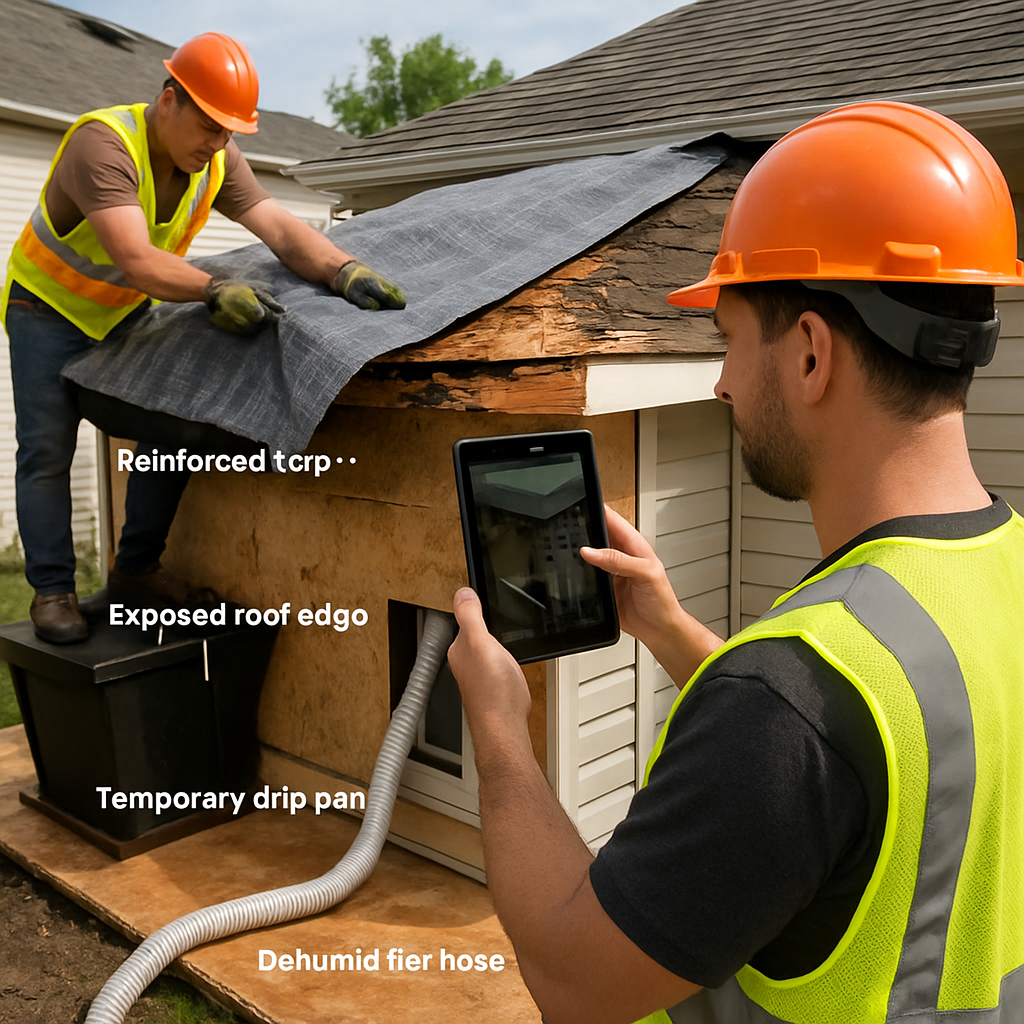
Takeaway: treat temporary protections as contract deliverables with clear ownership, measurable time limits, and a documented drying plan; cheap shortcuts on protection are the most common cause of concealed moisture claims after siding service.
Inspection, testing, and quality assurance protocols
Direct requirement: tie inspections and tests to defined project gates with measurable acceptance criteria. Visual checks are necessary but not sufficient; without agreed numeric thresholds and documented results you will get arguments later about what was concealed and when.
Testing mix: combine simple field tools and a few targeted lab-style tests. Use calibrated moisture meters for sheathing and framing, infrared thermography for concealed wet areas when conditions allow, adhesion or pull tests for self-adhered membranes and coatings, and controlled water tests at critical penetrations to validate drainage and flashings.
Practical QA gates and what each should cover
Gate 1 – Substrate acceptance: verify substrate dryness against the manufacturer specified limit (document which standard you used), log instrument calibration, and photograph exposed framing and sheathing from multiple angles.
Gate 2 – Membrane and flashing verification: perform adhesion pull tests or primer checks on a representative sample, confirm lap direction and lap dimensions, and capture geotagged photos of every vertical termination before any WRB overlap occurs.
Gate 3 – Pre-concealment validation: execute an IR scan during a day-night differential or after a controlled water test where practical, take moisture readings at suspect studs, and require documented corrective actions for any failures before fastening cladding.
- Calibration log: instrument make, model, serial, and last calibration date
- Photo set: timestamped, geotagged images for each interface location
- Raw test data: moisture meter readings and IR images with scale
- Corrective log: who fixed what, when, and retest results
Tradeoff to accept: third-party or manufacturer-witness inspections raise upfront cost and can extend schedule, but they convert subjective disagreements into contractual facts. In my experience that up-front expense buys a large reduction in concealed-defect claims and speeds warranty approvals.
Practical limitation: infrared scans are powerful but condition-dependent. They work poorly right after rain or when temperature differentials are small; do not rely on thermography alone—corroborate with moisture meter readings and, if needed, a brief controlled water test.
Concrete example: on a 6,000 sq ft strip mall retrofit the owner required pull tests for the liquid-applied roof membrane and a pre-concealment water hose test along parapet transitions. The water test revealed an improperly terminated counterflashing in one bay; the contractor repaired the detail and production siding never sealed over the defect, avoiding a tenant-side ceiling claim.
Insist that payment milestones reference passing specific gates rather than vague completion language; this makes interface quality enforceable.
Takeaway: write the tests and acceptance criteria into contracts and schedules, require calibration and raw data, and budget for at least one independent witness when warranties depend on sequence. For templates and suggested acceptance language see RoofWaterproofing.us services and technical guidance from NRCA.
Common failure modes and how to prevent them
Failure patterns are predictable. In combined roof waterproofing and siding service projects the same handful of defects cause most leaks because they are concealed during siding installation. Below I name the modes, explain why they happen, and give the specific prevention step an owner or project manager should require in contract and on site.
Improper WRB laps and reverse flow
When the WRB or housewrap is lapped so it sheds toward the roof membrane water is directed into the flashing interface instead of away from it. Prevent this by specifying lap direction in the scope and requiring timestamped photos at every interface before any siding closure. For vinyl siding services and fiber cement siding services, include a minimum lap dimension and a clause that says siding installers must tie WRB over roof flashings where required.
Missing or misinstalled step flashing
Step flashing omitted during siding installation is a routine failure when trades assume the other will provide it. Put the obligation in the contract matrix: list step flashing at each sloped roof-wall intersection, who supplies it, and require a signed Pre-Concealment Acceptance. At inspection, verify flashing tabs are interleaved behind siding courses and lapped onto the roof membrane.
Fastener breaches of secondary membranes
Siding nails and screws frequently penetrate peel-and-stick vertical flashings or self adhered membranes. This creates tiny but persistent leak paths. Prevention requires fastener placement rules in the scope, use of compatible sealants or patch flashing around penetrations, and a hold point inspection that samples fastener locations and documents repairs.
Gutter overflow and altered drainage lines
New siding heights or replaced gutter profiles can change where water flows and overload roof-wall intersections. Require a post-siding gutter and scupper review before final sign off. If the new cladding raises the waterline, budget for extended drip edges or modified scuppers rather than hoping gravity will work itself out.
Material incompatibility and hidden corrosion
Dissimilar metals or incompatible sealants at transitions fail after a few seasons. Insist on specified material pairings in the contract and require submittals that show manufacturer compatibility statements for metals, sealants, and any coatings. This is especially important for premium house sidings and metal counterflashing at masonry.
Tradeoff to accept: metal counterflashing lasts longer but needs precision fitting; peel-and-stick is faster and cheaper but is vulnerable to puncture and UV exposure. Choose based on expected lifecycle, not just upfront price, and require a manufacturer witness if the longer warranty depends on metal work.
Concrete example: On a 24-unit retrofit the siding replacement crew drove standard siding nails directly through newly applied vertical peel-and-stick flashing. A pre-concealment inspection found multiple penetrations; the team tore back affected areas, patched with compatible flashing tape, and re-documented the repairs. That one hold point stopped concealed leaks that would otherwise have required interior repairs and warranty disputes.
Small details cause the biggest claims. Enforce photographic hold points and documented repair steps for any discovered defect before the siding is closed.
Cost considerations, budgeting, and lifecycle value
Straight fact: integrating a professional siding service with roof waterproofing usually raises the upfront line item but reduces total lifecycle cost. Owners who treat these as separate, date-staggered projects almost always pay more overall because of duplicate mobilization, missed hidden repairs, and a higher probability of concealed defects.
How to break down and compare costs
| Cost bucket | Primary drivers | What owners should verify |
|---|---|---|
| Roof waterproofing and membrane work | Membrane type, perimeter flashings, substrate repairs | Confirm product life expectancy, adhesion testing, and manufacturer-approved applicator |
| Siding materials and attachment | Cladding type (vinyl, wood, fiber cement), trim, custom metal | Ask for sample mockups, finish warranties, and fastener/spec details |
| Interface flashings and custom metal | Parapet complexity, counterflashing, custom bends | Require shop drawings and fit-checks; custom metal often determines schedule |
| Hidden repairs and remediation | Rot, mold, insulation or sheathing replacement discovered during work | Set a pricing allowance and an approval process for changes |
| Contingency, QA and testing | Third-party inspections, adhesion/pull tests, moisture checks | Budget for targeted QA; it prevents large remedial costs later |
Practical insight: low bids commonly omit adequate flashing detail or understaff QA. That looks like savings on day one and becomes an expensive punch list or interior damage bill later. Prioritize bids that list exact flashing types, testing scope, and who pays for discovered substrate repairs.
- How to evaluate bids: Compare scope line by line rather than lump sums; insist on line items for step flashing, vertical peel-and-stick, custom counterflashing, and a testing allowance.
- Payment structure to use: Tie a single-digit retainage to integrated interface acceptance and require submission of QA deliverables before final release.
- Tradeoff to accept: Spending more on durable flashings and certified installers increases upfront cost but extends the useful life of both roof and siding, reducing replacement frequency and claims exposure.
Concrete example: a property owner chose an integrated approach on a 30-unit building: for an extra mid-range premium the team replaced suspect sheathing, installed metal counterflashing, and performed adhesion tests. The additional investment prevented interior drywall repairs and tenant disruptions that would have cost several times the premium within two years.
Judgment: cheap is cheap. When warranties and long-term performance matter, the meaningful comparison is not the lowest bid but the lowest expected cost over the next 5 to 10 years. That requires pricing the cost of potential concealed failures, repeat mobilizations, and warranty denials into your evaluation.
Next consideration: if budgets force phasing, design the phase split around watertightness rather than calendar convenience: complete roof waterproofing and perimeter flashings first, document acceptance, then phase siding removal and wrap-up. That sequencing reduces the chance that an early phase creates a concealed failure for a later one. For scope templates and combined service guidance see RoofWaterproofing.us services and technical references from NRCA.
Practical example of coordinated work featuring RoofWaterproofing.us
Concrete point: a single, documented handoff between roofing and siding teams removes most common ambiguity at the roof-wall interface. In practice that handoff needs timestamps, measurable acceptance items, and an explicit owner for corrections—otherwise the first rain after concealment creates a dispute, not a repair.
How RoofWaterproofing.us ran a mid-size commercial handoff
Work was scheduled so roof waterproofing, perimeter terminations, and temporary exposure controls were finished on day one of the turnover week. RoofWaterproofing.us documented membrane adhesion tests, uploaded geotagged photos of every vertical termination, and issued a digital pre-handoff packet. The siding contractor used that packet to plan WRB laps and step flashing placements so no critical flashing was ever hidden without prior verification.
Practical tradeoff: having RoofWaterproofing.us act as the integrator reduced rework and claims on that job, but it increased administrative cost and required a clearer change-order path. Owners should expect slightly higher coordination fees when one trade takes responsibility for the interface; the alternative—splitting responsibility—saves administrative cost up front but shifts financial risk to the owner when things go wrong.
Deliverables you should get at handoff: a timestamped adhesion/pull-test record, geolocated photo set of every roof-wall detail, a documented ambient cure confirmation for coatings, a signed tie-in checklist that names who will correct defects, and a digital QA packet with moisture meter logs. Require these as discrete files in the contract so acceptance is not a verbal agreement on site.
Concrete example: on a 28,000 sq ft commercial property RoofWaterproofing.us completed a liquid-applied waterproofing and left the vertical terminations exposed until the siding crew was ready. They provided a 48-hour cure confirmation, a membrane pull-test showing pass values above manufacturer minimums, and a time-stamped photo album. When the siding crew began WRB tie-in they discovered a 6 inch area of poor adhesion at one parapet; because the defect was documented and the contract named RoofWaterproofing.us as responsible, the membrane was repaired immediately and re-tested before closure—no tenant damage and no warranty dispute.
Judgment: owners often underestimate the value of enforceable digital evidence. Photographs without time or location metadata, or vague test summaries, are practically useless in a claim. Specify format and minimum content for each deliverable (for example, CSV moisture logs, PDF adhesion certificates, and geo-tagged JPEGs) rather than accepting whatever the contractor chooses to send.