
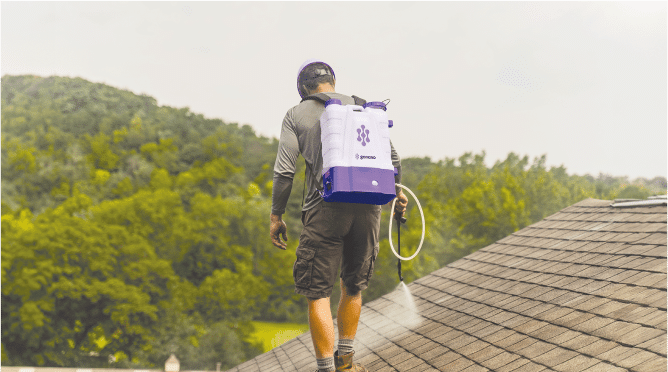
Emergency Roof Inspections: When Every Minute Counts
When a roof fails after a storm, every minute matters to limit interior damage and business interruption. This practical playbook for Roof Inspection walks building owners, facility managers, and realtors through prioritized triage for the first 0 to 72 hours, remote and on-site reconnaissance including drone and thermal options, temporary mitigation tactics, and the documentation insurers expect. You will get a step-by-step emergency roof inspection checklist, the tools and evidence templates to use, and a clear decision framework for repair versus coating versus full replacement.
Rapid Triage: What to Do in the First 0 to 3 Hours
Immediate priorities: protect people, protect critical systems, and stop active water entry. In practice that means evacuating wet or sagging interior spaces, isolating electrical panels or circuits threatened by water, and preventing runoff from reaching sensitive equipment. These three actions decide whether you lose assets or just get a repair bill.
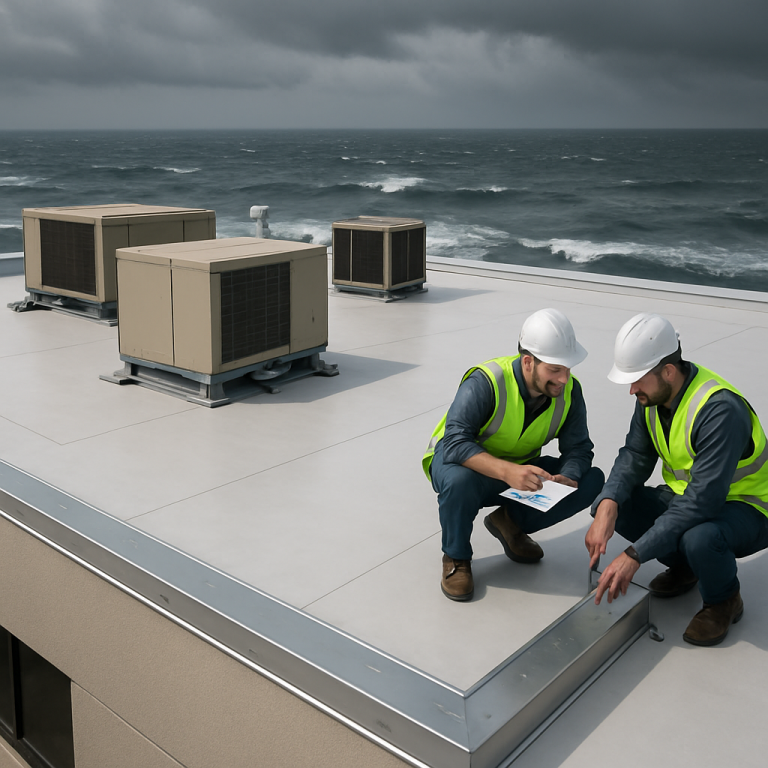
Practical constraint: do not send untrained staff onto a damaged roof. Fall hazards, hidden deck failure, and live electrical exposure are common and fatal. If roof access is required within the first three hours, use trained crews with fall protection or deploy drone reconnaissance and remote guidance instead.
Immediate Triage Checklist
- Safety first: evacuate affected interior zones and tag electrical panels if water is present.
- Stop the leak: catch and route water with buckets, temporary chutes, or pumps – prioritize areas above mechanicals and data rooms.
- Protect equipment: raise or move electronics, cover items with plastic sheeting, and park portable generators upslope if used.
- Temporary roof cover: apply tarps only if a certified crew or trained technician can safely install them; poor tarping often fails in high wind.
- Document everything: take timestamped photos, short video clips, and drone overviews if available; capture GPS and orientation of each image.
- Call the right help: emergency roofing contractor for immediate patching, structural engineer for visible deck deflection or sag, and notify your insurer per policy requirements.
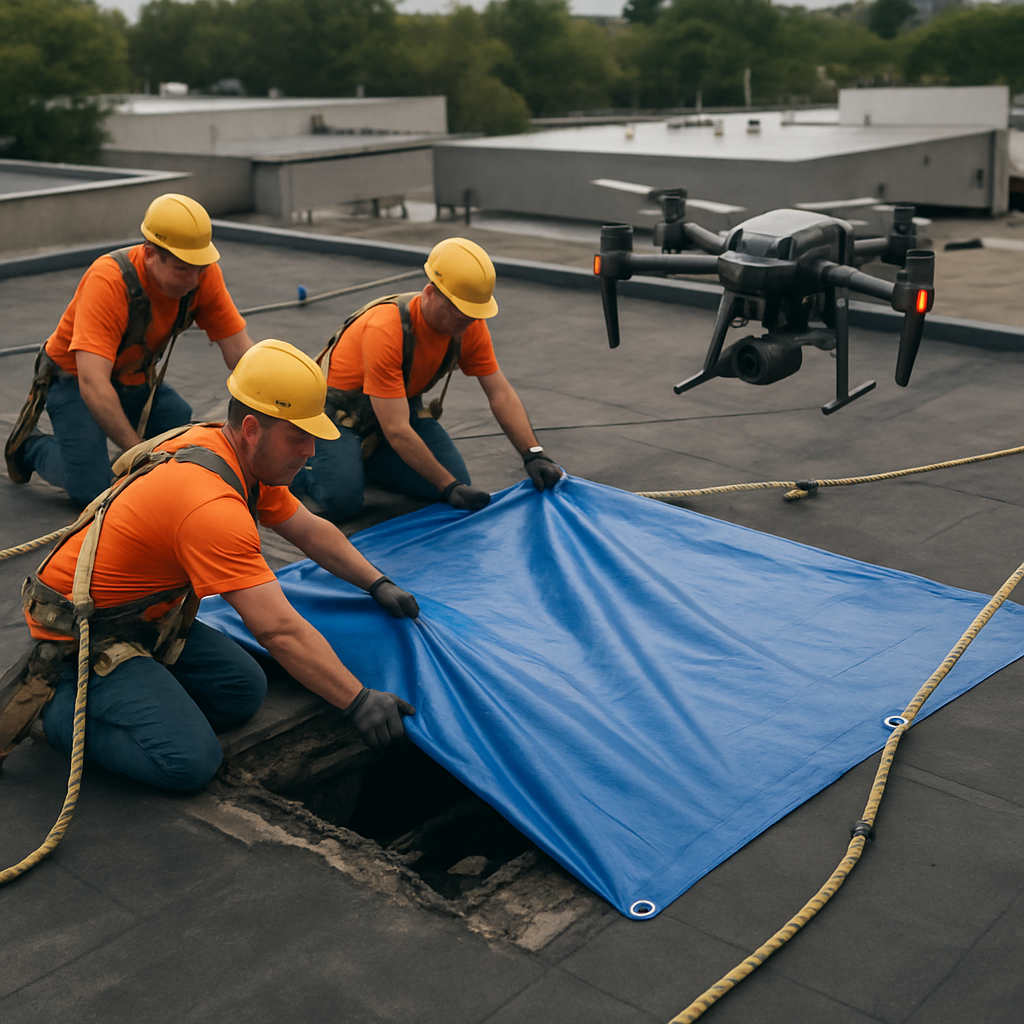
A real-world example: After a microburst blew open a hospital penthouse, the facilities lead ordered a drone overfly and then directed a certified crew to tarp the opening. The crew arrived in 75 minutes, contained runoff away from the electrical room with temporary pumps, and the insurer approved emergency mitigation because of the timestamped photos and contractor invoice.
Trade-off to manage: a quick tarp can prevent interior damage but may trap moisture against the deck and hide saturated insulation. If you see insulation wetness or suspect saturation, note it in the inspection report and plan for core sampling within 24 to 72 hours – temporary fixes are triage, not a substitute for moisture assessment.
If you see roof sagging, major deck deflection, or cracked load-bearing members, stop all interior operations in the affected area and call a structural engineer and emergency services immediately.
Next consideration: confirm contractor ETA, assign a single point of contact for evidence handoff to the insurer, and decide whether remote assessment is sufficient to delay on-roof work until proper PPE and fall protection are in place.
Prioritizing Inspections Remotely: Use of Photos, Facility Logs, and Drone Recon
Remote-first triage decides the initial response. With limited time and safety constraints, a well-structured set of images, specific facility log entries, and a short drone recon can stop unnecessary crews from climbing roofs and get the right crew on site when it matters. Ask for actionable evidence, not casual snapshots.
What to request from the onsite contact
- Location and orientation: a simple grid or zone label for the roof area plus a photo showing the nearest building corner or rooftop unit for orientation
- Image sequence: one wide context shot, two mid-range shots showing surrounding drains and ponding patterns, and two close-ups of any visible damage with a tape measure or coin for scale
- File quality and metadata: request images with embedded GPS and EXIF data or original files; if bandwidth is constrained ask for high-quality JPEGs 3 to 8 MB rather than tiny compressed images
- Facility logs to check: last drain clearing, recent roof repairs or penetrations, HVAC condensate drain records, and any rooftop work permits or service orders from the last 12 months
- Sensor and CCTV outputs: roof or attic moisture sensor logs, building management system alerts, and any time-stamped CCTV showing when water first appeared
Practical limitation: facility staff often send low-resolution photos or forget orientation. Insist on the sequence above and preserve EXIF data. Without scale and location context a photo has low evidentiary value for insurance and triage decisions.
Drone reconnaissance best practices
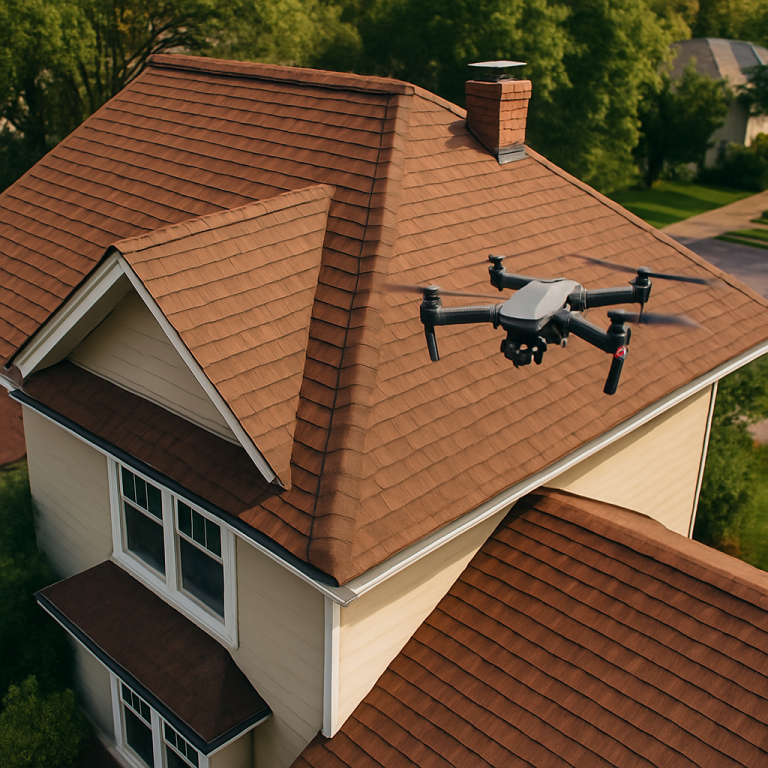
Keep the recon short and structured. A 5 to 10 minute flight that follows a checklist gives more decision value than unfocused 20 minute video. Capture oblique shots of parapets and eaves, nadir shots for ponding maps, and focused passes over penetrations, curbs, and HVAC curbs.
- Flight settings: 100 to 150 feet AGL for context, 20 to 40 feet for close inspections; use 4K video or high-res stills and keep a visual observer when required by local rules
- Thermal imaging caveat: schedule thermal passes during times of good thermal contrast – typically before sunrise or late evening – otherwise thermal imaging will mask moisture behind insulation
- Regulatory and safety: verify local UAV rules and building owner permissions before flight; do not rely on drone footage as a substitute for fall protection or for work that must be done on the roof
Judgment call: drone and thermal recon will reliably identify membrane tears, open seams, and large ponding areas on most flat roofs. They are poor at proving deep insulation saturation or deck rot. If drone imagery shows suspect wet spots around seams or many small anomalies, plan for intrusive moisture testing within 24 to 72 hours.
Concrete example: A distribution center reported leaking near a loading dock. The facilities contact sent high-resolution context photos and the drain maintenance log showing drains not serviced in 120 days. A drone pass identified a 3 foot seam separation near an HVAC curb and a concentrated ponding area. Based on that remote evidence the emergency crew was dispatched with pumps and materials for an immediate patch, avoiding a later larger interior claim.
BuildingRoofZoneAYYYYMMDDHHMMlatlon.jpg. That single step speeds insurer validation and reduces back-and-forth that delays emergency work. For technical standards on remote inspection practices see NRCA.Final consideration: remote inspection is a filter, not a fix. Use it to prioritize crews, specify the right temporary materials, and decide whether immediate on-roof intervention is required. When facility logs, high-resolution imagery, or drone thermal data are ambiguous, err toward on-site moisture scanning and core cuts before accepting a temporary repair as sufficient.
On-site Safety and Access Protocols for Emergency Inspections
Access control decides outcomes. A badly managed on-site inspection turns an urgent repair into a workers compensation claim and a denied insurance payout. Treat access as an operational permit: who may set foot on the roof, under what written conditions, and for how long.
Core requirement: only personnel with a documented fall protection plan, calibrated PPE, and a site-specific work authorization should be on the roof. No exceptions when wind, saturated decks, or visible edge damage are present.
Minimum on-site access protocol
- Site briefing: 5-minute safety brief and map of roof zones identifying restricted areas and fragile surfaces.
- Written authorization: a signed emergency scope showing tasks allowed, time window, and who the building single point of contact is.
- Lockout/tagout: mechanical and electrical equipment near work zones must be isolated with permits recorded in the site log.
- Fall protection confirmation: anchor inspection record, harness fit check, and a designated fall protection supervisor on site.
- Evidence custody: assign who photographs, timestamps, and retains material samples to preserve the chain of evidence for insurers.
Practical trade-off: speed versus control.** Fast crews reduce interior damage but raise the risk of missed concealed failures or uninsured interventions. Insist on a short, focused scope for emergency work and defer broader destructive investigation until proper safety controls and insurance notifications are in place.
Verification before work begins matters more than certificates waved at arrival. Confirm a contractor's COI on site, check that the assigned inspector is a certified roof inspector or licensed roofer with manufacturer emergency repair credentials, and photograph the COI and license page into the job file before tools come out.
Judgment call: if the roof shows localized punctures but the deck feels springy underfoot, stop on-roof activity and switch to drone and attic inspections. Walking a compromised deck is a known failure mode that produces secondary damage and liability.
Concrete example: A town hall experienced sudden leakage after hail. Facilities allowed a contractor to access the roof before seeing a written scope. The crew made temporary patches but lacked a current COI; the insurer later denied part of the claim because the contractor was uninsured for that jurisdiction. The building re-issued work only after obtaining a signed emergency scope and the contractor provided proof of manufacture-certified patch training; future interventions were limited to supervised visits.
Next consideration: appoint a single evidence custodian and limit roof access windows to reduce both risk and the potential for undocumented repairs that complicate insurance recovery.
Systematic Emergency Roof Inspection Checklist
Start with measurable evidence, not impressions. A productive emergency roof inspection produces quantifiable items you can act on: seam gap in inches, ponding area in square feet, tear count and dimensions, moisture meter values with reference points, and a photographed chain-of-evidence for each finding. Treat the inspection as an input into a prioritized work list that drives immediate mitigation, temporary repairs, and a follow-up moisture survey or core sampling.
How to translate observations into an action plan
Record each defect with four fields: location ID, measurement or reading, photo/video with scale and timestamp, and recommended short-term action. This simple schema lets you sort by risk and produce a clear roof inspection report for insurers and contractors. If you cannot capture a numeric measurement safely, mark the spot for intrusive testing within 24 to 72 hours.
| Inspection Item | What to Record (minimum) | Quick Severity Rule | Immediate Action |
|---|---|---|---|
| Perimeter and edge uplift | Seam gap (in), loose coping fasteners, photo oblique with scale | Seam gap > 1 in or fastener failure = High | Temporary edge securement, ballast removal, crane access if needed |
| Drains and scuppers | Flow test, standing depth (in), debris type, last service date | Standing > 2 in after 24 hr = Medium-High | Clear, deploy pumps, route runoff away from openings |
| Membrane tears and punctures | Count, longest dimension (ft), photo with scale | Any tear > 1 ft or multiple small tears = High | Cold-applied patch or welded patch from certified crew |
| Penetrations and flashings | Gap measurement, sealant failure, loose curb fasteners | Separated seal or missing flashing = High | Temporary flashing strip, sealant, photo for warranty support |
| Suspected insulation saturation | Thermal anomaly location, moisture meter value, attic/ceiling check | Thermal anomaly + moisture reading above local dry baseline = High | Core sampling scheduled within 24-72 hrs; interim tarp/coating not final |
Practical trade-off: a fast, visible patch reduces interior losses but can obscure evidence of insulation or deck saturation. If you authorize immediate temporary repairs, require the crew to mark and tag every patched location and schedule intrusive verification within the next inspection window. That prevents repeated emergency trips and disputed insurance claims.
Concrete example: After a cold-weather storm, an eight-unit apartment building reported interior stains on three ceilings. The on-site team logged GPS-tagged photos, a moisture meter reading in the attic, and an infrared pass showing two thermal anomalies. Core cuts at the anomalies confirmed wet insulation; the emergency crew installed temporary welded patches and pumps while the owner approved a targeted replacement of the saturated sections, reducing unnecessary full-roof replacement costs.
Prioritize defects that threaten interiors or life-safety systems first: edge uplift that can blow off in wind, drainage failures that cause rapid ponding, and penetrations leaking above mechanical rooms.
One operational detail many managers miss: set a pre-authorized emergency spend threshold and a short vendor list with pre-verified COIs and manufacturer emergency credentials. That removes bureaucratic delay that costs interior assets. Next consideration: ensure the prioritized list created here feeds directly into your temporary mitigation contracts so each item has an owner, ETA, and an evidentiary photo linked to the roof inspection report.
Temporary Mitigation and Emergency Repair Techniques
Immediate objective: stop active water entry and protect interiors while keeping the damage traceable for later analysis. Temporary actions should be surgical: close the hole, divert the flow, and mark everything you altered so the next diagnostic step — moisture testing or core sampling — is not compromised.
Approved temporary measures and how to apply them
- Tarping with mechanical anchorage: use reinforced tarps laced to plywood cleats and fastened to the roof substrate with screws through pressure-treated blocking. Lap tarps uphill and provide a drainage chute; avoid solely weighting with ballast. This preserves evidence and keeps water off interiors without adhesive contamination.
- Welded or heat-fused patches (for thermoplastics): clean surrounding membrane, remove ponding, and have a certified crew perform heat welding using manufacturer-approved patch sheets. This method restores continuity faster than most cold patches and is acceptable under many warranty conditions when documented.
- Cold-applied, solvent-free patches (for sensitive substrates): use manufacturer-recommended butyl or polymer mastics where heat is unsafe. These are faster to deploy but have shorter service durability and must be flagged for follow-up.
- Drain clearing and temporary pumping: establish positive routing for runoff — install trash-screens, deploy submersible pumps sized for expected flow, and route discharge away from building openings and foundations.
- Temporary edge securement: for lifted copings or loose metal edges, install screw plates or strap restraining devices anchored back to structure to prevent wind uplift until a certified repair crew can complete permanent fastening.
What to avoid and why: do not use generic adhesives, duct tape, or non-compatible mastics (for example, asphalt-based cements on PVC membranes). These materials chemically interact with modern membranes, sabotage future welded repairs, and often void manufacturer warranty terms. Painting over defects or using short-term caulk creates a cosmetic fix that traps moisture and hides saturation.
On coatings as an interim measure: roof coatings can be useful when the membrane is intact and dry — they reduce water penetration and slow UV degradation. They are not appropriate over wet insulation, active leaks, or where seams are failing. Require a pre-coating moisture survey and manufacturer-certified applicator; if moisture is later found, the coating only delayed the inevitable and complicates remediation.
Concrete example: a manufacturing facility had a 4 foot membrane tear near an HVAC curb after high winds. A certified crew performed an emergency welded patch, cleared a nearby clogged scupper and set two pumps to manage runoff into a temporary daylighting channel. The documented repair and pump logs prevented flood damage to electrical vaults and preserved the roof for a focused replacement of affected panels two weeks later.

Practitioner judgment: resist the urge to lock in a permanent-seeming fix under time pressure. Fast, aggressive temporary measures reduce interior loss but can obscure the true scope of damage. Require that any emergency repair include clear labelling, a photographed chain-of-evidence, and a short-window plan for moisture verification — that discipline saves money and prevents repeat emergencies.
Documentation and Insurance Claims: How to Create an Audit Trail
Straight to the point: insurers approve mitigation and repairs based on the quality and continuity of your evidence, not your intent. A well-constructed audit trail converts an emergency roof inspection from a contested claim into an accepted expense. Build it deliberately.
Audit-trail blueprint: what to collect and how to control it
Chain-of-custody beats scattershot photos. Capture each item with who, when, where, and how — and keep those records together. That means a single digital folder per event, a short site log entry for every intervention, and a retained physical sample protocol (bag, label, witness signature) if you remove insulation or membrane pieces.
| Document | How to capture | Primary purpose | Assigned owner |
|---|---|---|---|
| Context imagery and drone video | High-res stills and video with preserved EXIF/GPS, flight log export | Shows overall damage pattern and timing | Onsite evidence custodian or drone operator |
| Instrument readings | Moisture meter, thermal images with device ID and baseline reading | Proves concealed saturation vs surface wetness | Certified inspector who performed the scan |
| Work authorization & invoices | Signed emergency scope, itemized invoice with time stamps | Demonstrates necessity and cost reasonableness | Facilities manager or contract administrator |
| Physical samples | Bagged, labeled cut samples with photographed label and signature | Definitive proof of membrane type and insulation saturation | Inspector and site witness |
| Communications log | Email/SMS thread archive and a short incident timeline doc | Shows notification cadence and insurer contact | Single point of contact |
Practical trade-off: you cannot both preserve perfect evidence and eliminate interior leakage instantly without planning. If you authorize an emergency crew to patch before moisture cores are taken, require them to flag and photograph each patched location and retain removed materials. That protects swift mitigation while keeping the evidentiary chain intact for the insurer.
Common misread in practice: building owners assume a few photos and a contractor invoice are enough. In disputes adjusters routinely ask for device-calibrated moisture logs, drone flight exports, and proof that temporary work followed manufacturer-approved methods. Without those, payments are delayed or reduced.
Concrete example: A regional retail center documented a wind-uplift event with a 12-image sequence, the drone flight log, two moisture meter readings, and a sealed sample of saturated insulation signed by the onsite manager. The insurer accepted emergency tarping and payed for targeted panel replacement because the submission proved both urgency and residual saturation that required permanent work.
Next operational step: before any emergency work start, send the insurer a one-page incident notice with the event time, assigned evidence custodian, and the planned temporary actions. That short, factual message preserves eligibility for mitigation costs and prevents later denials. If you need certified emergency services, see our emergency response options at Emergency Roof Repair.
Bottom line: treat documentation as an operational task with roles and deliverables. Good evidence shortens claims, preserves warranties, and prevents rushed permanent repairs that cost more later.
Choosing a Contractor Quickly: Verification, Response Time, and Scope Control
Make the hire decision transactional and evidence-driven, not emotional. In an emergency the right contractor stops incoming water and preserves proof you will need for insurance and long-term repairs. Speed matters, but unchecked speed that sacrifices verification or scope discipline creates secondary cost and liability.
Three-minute verification matrix
- ID and authority: confirm the arriving crew lead is a licensed roofer or certified roof inspector and photograph their license and company COI before tools are opened.
- Manufacturer and warranty fit: ask whether the crew carries manufacturer-certified emergency repair credentials for the membrane type you have – get the cert name and take a photo of the card or app record.
- Clear emergency scope and spend cap: insist on a one-page emergency scope with itemized immediate tasks, provisional sums for unknowns, and a short time window for the work (for example, temporary patching and pump setup only).
Practical trade-off: a fully vetted contractor who arrives in four hours is usually better than an unvetted crew on-site in one hour. Fast but undocumented work creates denial risk with insurers and invalidates some warranty terms. Use a pre-authorized emergency spend threshold so you do not bottleneck decisions, but require immediate documentation to validate the cost later.
Scope control is the lever that prevents scope creep and hidden damage. Require the contractor to deliver an itemized emergency roof inspection report and a short-term repair plan before work starts – not after. The report should separate temporary mitigation tasks from diagnostic actions that must follow, such as core sampling, thermal imaging, or moisture surveys.
Limitation to accept: temporary repairs and emergency patches can be manufacturer-approved yet still mask insulation saturation. If the contractor cannot commit to tagging patched locations and retaining removed materials for later moisture analysis, treat the job as containment-only and schedule intrusive testing before permanent repairs.
Concrete example: A university lab building had a sudden leak above a research wing. Facilities activated the pre-vetted vendor list; a certified crew arrived in 90 minutes with documented manufacturer patch credentials and a signed emergency scope limiting work to welded patches and pumps. They tagged every patch, saved membrane samples, and logged pump run times – that documentation allowed the insurer to approve targeted panel replacement two weeks later instead of forcing a full-roof replacement.
Do not accept verbal promises. Photograph COIs and certifications, get a signed emergency scope, and insist on an itemized temporary estimate before work begins.
Next consideration: if you do not already have a pre-approved vendor list and emergency spend cap, create one now. In practice this single preparation shortens response time and prevents the worst outcomes when an urgent roof inspection and fast mitigation are required.
Post Emergency Action Plan: Transitioning from Temporary Mitigation to Permanent Recovery
Immediate planning matters more than a perfect fix. As soon as temporary mitigation is in place, create a follow-up roadmap: schedule diagnostic verification, set decision checkpoints, and lock short windows for permanent work. Treat the temporary repair as lifespan-limited and budget the inspection and remediation steps that follow.
The core diagnostics you must get before deciding repair, coating, or replacement are quantified moisture state, deck condition, membrane continuity, and life-cycle cost versus operational risk. A credible roof inspection report should pair thermal imaging with moisture meter logs and at least 2–4 core cuts in representative locations. Without those data, any permanent choice is gambling with long-term costs and warranty exposure.
Decision checkpoints and practical thresholds
- Isolated damage, dry deck: small tears or punctures affecting less than ~5% of the roof area with no moisture in adjacent boards = targeted repair. Schedule professional roof inspection and welded or manufacturer-approved patching.
- Intact membrane but widespread surface deterioration: membrane shows UV failure and substrate is dry across >75% of field = coating or restoration system may be cost-effective; require a certified applicator and a pre-coating moisture baseline to avoid trapping water.
- Concealed saturation or deck softening: moisture readings above local baseline in multiple, noncontiguous cores or deck deflection = sectional or full replacement. Coatings in this condition only delay failure and increase removal costs.
- Multiple seam failures/edge uplift or age beyond expected useful life: repeated seam separation, fastener pullout, or manufacturer end-of-life within 5 years = replacement is usually the economical choice when projected repair frequency exceeds replacement amortized cost.
Practical trade-off: coatings buy time and reduce leak frequency when the roof is dry and seams are intact, but they complicate later removal and can hide ongoing saturation. If you plan to coat, require documented core results and manufacturer sign-off; otherwise the coating becomes a cosmetic bandage that raises the roof inspection cost and future remediation bill.
Concrete example: A regional warehouse had emergency patches after wind uplift. Thermal imaging and four core samples found saturated insulation under 6 roof panels and good membrane elsewhere. Facility managers chose targeted panel replacement rather than a full coating because the cores proved concealed saturation; temporary patches kept operations running while replacement materials were staged and scheduled for 45 days out.
Judgment most owners miss: the correct long-term answer is rarely the cheapest immediate repair. Aim to minimize total disruption and avoid repeated emergency callbacks. A higher upfront roof inspection cost for thorough thermographic and core analysis usually reduces total lifecycle spend and prevents warranty disputes.
Plan irreversible actions only after intrusive verification. Mark and photograph every temporary repair so later cores and replacements can be planned without guesswork.
Next consideration: lock a 30/90 day calendar for stabilization checks and a final decision meeting that uses the inspection package, warranty constraints, and a simple life-cycle cost model to approve either permanent repair, a certified coating, or staged replacement.
Real World Examples and Lessons Learned
Practical observation: after major events the work that prevents business loss is rarely the most technically elegant — it is the fastest documented action that preserves interior assets while keeping later diagnostics possible. That dual mandate explains why tagging, geolocation, and an evidence custodian are more valuable than a cosmetic temporary patch.
A common trade-off you must manage is speed versus investigability. Rapid patches and tarps reduce immediate loss but can obscure moisture paths and void warranty callbacks unless every intervention is photographed, GPS-tagged, and samples retained. In practice I prefer a minimal, well-documented intervention over a broad, fast fix that cannot be reverse-engineered by a certified inspector or an adjuster.
Hurricane-related wind uplift and ponding – operational lesson
Concrete example: during a post-hurricane response on several low-slope commercial buildings, parapet seam failures and edge uplift clustered on windward corners while separate roof fields developed rapid ponding where drains had been blocked by debris. Crews that arrived with pre‑staged parapet strap kits, temporary pump rigs, and a simple geotagging workflow prevented water from reaching electrical rooms and saved at least one week of downtime for tenants.
What mattered most in that scenario was not the brand of patch but the operational rhythm: recon by drone within the first two hours, assignment of a single evidence custodian, and a short written emergency scope that allowed crews to secure edges and deploy pumps without doing irreversible core cuts. The limitation: these mitigations can only buy time. If core tests later show insulation saturation, expect sectional replacement rather than repair.
Winter storm ice dams and backup – what actually works
Concrete example: after a severe freeze event, multiple mid-rise residential roofs leaked because gutter scuppers iced closed and meltwater backlogged under flashings. Facilities that used controlled heat tracing, temporary heat tents over key parapet scuppers, and cleared melt channels avoided costly interior drywall replacement. Those interventions required a fire-watch and documented fuel/operation logs to be acceptable to insurers.
Key limitation: temporary heat operations introduce new hazards and insurance questions. If you use portable heating, require a written hot-work plan, a fire-watch, and recorded run-times. Failure to do so often converts an otherwise legitimate mitigation into a contested claim.
Actionable insight: convert your inspection outputs into a simple spatial map — overlay drone imagery, thermal anomalies, and moisture meter readings into a single image or KML. That map makes repair prioritization obvious, speeds adjuster approval, and reduces the chance you replace dry areas while missing saturated ones.
A practical judgment many owners miss: spending on a quick, thorough roof inspection (including 2–4 core cuts and thermography) almost always reduces total payout compared with repeated emergency patches. The upfront roof inspection cost accelerates correct scope decisions and limits lifecycle expense.
Document-first rule: secure the leak, tag every intervention, and produce a geolocated defect map before any irreversible permanent work is authorized.