
When you manage property on the Mississippi coast, choosing the right roofing companies in Mississippi matters because wind, salt, and storm surge produce failure modes most contractors miss. This how-to guide lays out how professional contractors assess risk, select waterproofing systems, install to tested wind-uplift details, and run pre-storm and post-storm workflows you can verify. You will get concrete steps for specification, procurement, cost and lifecycle trade-offs, and emergency planning so you can reduce downtime and insurance uncertainty after a major event.
Coastal hazard profile for Mississippi and implications for roofs
Mississippi coastal roofs fail for three related reasons: wind uplift, wind-driven water, and salt-driven corrosion. These hazards interact—wind strips flashings and exposes edges, driving rain forces water through small gaps, and salt accelerates fastener and metal degradation so small failures grow fast. Refer to NOAA and FEMA flood maps for location-specific surge and wind history when setting performance requirements.
How those hazards translate into real failure modes
Asphalt shingles and steep roofs. Edge and shingle blow-off during gusts; sealant failures where salt has lifted granules; underlayment saturation from wind-driven rain entering soffits and rake edges.
Single-ply membranes (TPO/PVC/EPDM). Seams and heat-welds split under uplift cycles, and TPO that has lost plasticizers can crack in high UV. A coating can reduce leaks but will not fix a membrane with failed attachment.
Metal roofs and flashings. Corroded screws, backed-out fasteners, and damaged clips are the common root cause of sheet loss; painted finishes can fail early near salt spray if the wrong coating is used.
- Practical specification items to require: ask bidders to provide the assembly uplift rating (psf or design wind speed), identification of the tested assembly (FM or Miami-Dade report numbers), and corrosion-resistant fastener schedule.
- Water-holdout thresholds: require a membrane or coating system that demonstrates ponding-water resistance where drainage is marginal; verify compatibility with expected rooftop traffic and HVAC curb details.
- Corrosion controls: specify stainless or hot-dip galvanized fasteners and sealed edge terminations in any area within salt-spray distance of the coast.
Trade-off to watch: choosing a roof coating because it is cheaper now is sensible only if attachment, substrate, and flashing details are sound. If fasteners, deck attachment, or seams fail under wind loads, a coating is a temporary fix and increases total life-cycle cost.
Concrete Example: On a 40,000 sq ft coastal warehouse, Roof Waterproofing Company performed an inspection, replaced corroded fasteners at the perimeters, installed continuous cleats at copings, and applied a manufacturer-approved silicone coating over the existing single-ply after adhesion testing. The work prevented immediate leaks and bought 6–8 years of service life while the owner budgeted for phased replacement.
Key point: demand tested assemblies and specify what to verify on the jobsite—uplift rating, fastener pull tests at edges, and a pre-application salt decontamination step for coatings.

Assessment and diagnostics used by roofing companies
Direct assertion: a professional, coastal-grade roof assessment is a diagnostic sequence, not a single inspection — you need layered evidence (visual, thermal, destructive sampling, and mechanical tests) to decide between a targeted repair, a coating, or a replacement. Failure to combine methods produces unreliable lifespan estimates and bad procurement decisions.
What diagnostics actually answer
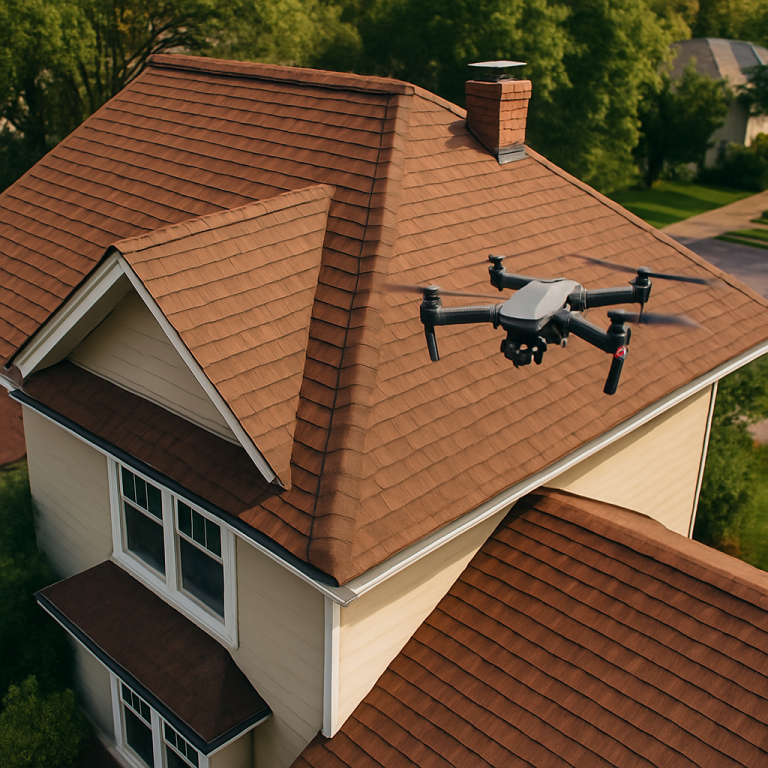
- Visual-plus-drone survey: confirms exposed failures, loose edge metal, and visible corrosion at scale; drones let assessors flag areas for follow-up sampling without immediate roof access.
- Thermal/IR scan: locates wet insulation and membrane delamination but requires cool, stable conditions to avoid false positives; pair scans with ground-truth cores before spending on repairs.
- Core sampling and probe checks: identifies deck type, saturated insulation, and membrane layer count — this is the definitive test but must be limited to representative locations to preserve warranty coverage.
- Adhesion and pull tests:
ASTM D4541pull-off tests for coatings and manufacturer pull tests for fastener withdrawal verify that the system will resist uplift and will accept a coating adhesion. - Seam and weld inspection: visual, hand-torque, and destructive seam checks for single-ply systems; if welds show embrittlement or frequent open seams, a coating is a temporary stopgap, not a long-term fix.
- Salt contamination and surface chemistry checks: rapid surface conductivity or chloride tests to determine if decontamination is required before coating; skipping this short test guarantees early coating failure on coastal roofs.
Practical trade-off: thermal scans are fast and inexpensive for triage but will overcall wet areas on hot, sunny days. Spend the money on a few strategic cores where the IR map and drone photos disagree — that targeted destructive testing prevents over-specification of full replacement.
Concrete Example: Roof Waterproofing Company performed an IR survey on a 25,000 sq ft retail roof after a storm. Drones flagged four suspect zones; two IR hotspots were dry on core sampling, one had saturated insulation at an HVAC curb. The contractor ran adhesion tests, removed salt contamination at the curb, replaced the wet insulation locally, and specified a silicone coating only where adhesion passed the ASTM D4541 threshold.
If a diagnostic package lacks destructive confirmation of suspected wet areas, treat a coating recommendation as provisional and budget for follow-up core testing.
Waterproofing systems and materials used in coastal Mississippi
Direct point: roofing companies in mississippi choose systems based on three practical constraints: substrate condition, exposure to salt and UV, and the need for tested wind-uplift performance. Materials are not interchangeable; the wrong choice speeds failure.
System selection by substrate and exposure
Match the system to what is under the membrane. Mechanically fastened single-ply (TPO, PVC) is sensible when deck attachment is solid and uplift ratings are required. Fully adhered membranes reduce flap and seam movement but demand clean, dry substrates and compatible adhesives. EPDM tolerates movement and is forgiving on penetrations but needs robust flashing details in wind zones. Metal roofing performs well when specified with PVDF/Kynar finishes and corrosion resistant fasteners.
| System | Representative products / manufacturers | Coastal suitability and practical note |
|---|---|---|
| TPO (single-ply) | GAF EverGuard, Carlisle Sure-Weld | Good UV and chemical resistance when seams are intact; requires seam-weld quality control and periodic inspection |
| PVC (single-ply) | Sika Sarnafil, Carlisle | Better chemical resistance and welding properties near HVAC exhausts; use in high-salt areas with stainless fasteners |
| EPDM | Firestone, Mule-Hide | Durable and flexible; seams rely on adhesives so verify adhesion and edge securement |
| Silicone coating | Gaco, Elastek | Excellent ponding-water performance and UV stability; only as good as the prepared substrate and attachment |
| Polyurea / polyurethane | Tremco, specialty applicators | Rapid cure for emergency fixes; fast return to service but may need a UV-stable topcoat for long term |
| Metal with PVDF | Coil-coated steel or aluminum | Long life with correct clips and 316 stainless fasteners; plain steel without coating fails fast near salt spray |
Practical limitation: fluid-applied coatings extend life only when the membrane attachment, flashings, and metal fasteners are serviceable. If pull tests or core samples show failed attachment or corroded edge fasteners, a coating is an operational stopgap not a durable solution.
Coatings tradeoffs and on-site controls
Coatings vary in cure behavior and salt tolerance. Silicones tolerate ponding and UV; they resist washout from salt spray when applied to a decontaminated surface. Acrylics are low cost but often fail faster in salty, high-UV environments. Polyurethanes and polyureas bond well and are abrasion resistant; polyureas cure fast but often require a UV-stable topcoat or will chalk prematurely in direct sun.
Require these on the job: surface chloride tests before coating, manufacturer applicator approval, adhesion verification with ASTM D4541 where coatings are used, and stainless or hot-dip galvanized fasteners at perimeters. Ask for documented FM or Miami-Dade tested details when uplift resistance matters.
Concrete Example: On a beachfront condominium, Roof Waterproofing Company found widespread pitting of perimeter screws and delaminated membrane laps. They removed corroded metal, installed 316 stainless fasteners and continuous cleats at copings, replaced localized wet insulation, then applied a silicone coating system approved for use over the selected membrane. The project returned the roof to watertight condition and secured a multi-year manufacturer coating warranty.
If you are specifying work, include surface contamination testing, a verified fastener schedule, and the product model numbers in the scope. See roof coatings for typical systems and applicator qualifications.
Critical installation details that prevent wind uplift and leaks
Concrete point: most wind- and water-related roof failures on the Mississippi coast are installation failures, not material limitations. Properly executed edge terminations, flashings, substrate prep, and controlled fastening patterns stop the failure modes that lead to uplift and progressive leaks.
Edge and perimeter securement
Edge securement matters more than the membrane type. Use continuous termination bars or stainless steel cleats anchored into structural blocking, not just face-screws into thin metal. Specify fastener embedment into blocking or purlins, fastener spacing tied to tested assembly reports, and double-cleat details on parapets higher than 24 inches to resist cantilevered uplift.
Flashings, penetrations, and transitions
Field-fabricated flashings are the weak link in storms. Wherever possible require factory-formed flashings or prefabricated curb systems for HVAC penetrations. For field work, insist on poured or pre-formed cant strips where roof slope changes, butyl-backed termination bars at membrane edges, and continuous counterflashing set into reglet with stainless steel anchors.
Substrate preparation and coating controls
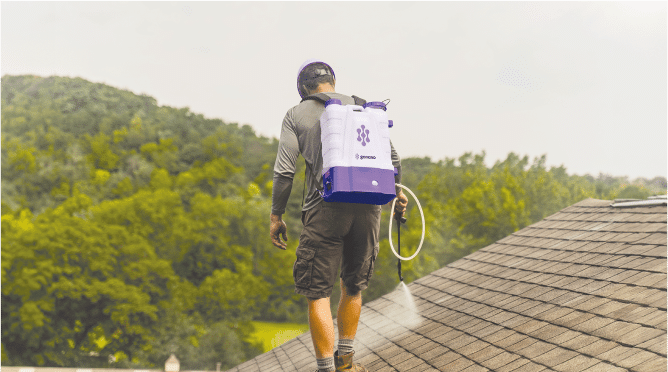
Coatings only perform if the surface is chemically and physically prepared. On coastal roofs insist on a documented sequence: fresh-water pressure wash, chloride reduction testing, profile grinding or power washing to achieve the specified profile, primer approved by the coating manufacturer, and a timed window between primer and topcoat. Skip any step and expect premature delamination.
Practical trade-off: mechanical fastening with stainless fasteners plus a seam-welded single-ply costs more up front than a coating over an existing membrane, but it materially reduces the chance of edge failure in high-wind zones. If budget forces a coating, require targeted mechanical repairs at edges and documented adhesion testing first.
On-site QA testing and owner verification
Require these owner-witnessed hold points during the job and insist on recorded results: fastener pull tests at each perimeter detail, destructive seam checks (minimum three per 1,000 squares), chloride/conductivity readings before coating, and holiday testing after coatings cure. Have the contractor upload timestamped photos and raw test files to the project folder.
- Hold point 1: Verify continuous structural blocking behind coping before any cleat is installed
- Hold point 2: Witness fastener pull tests at corners and high-wind exposure walls
- Hold point 3: Confirm chloride reduction values meet manufacturer thresholds before primer
- Hold point 4: Observe and sign-off on seam weld sample locations and destructive tests
- Hold point 5: Require holiday test results and a photographed continuity map after coating
Concrete Example: On a 32,000 sq ft coastal retail roof, Roof Waterproofing Company specified new structural blocking at the parapet, installed a continuous stainless cleat with 6 inch embedment into blocking, performed pull tests at 50-ft intervals, and only then applied a silicone coating where adhesion met ASTM D4541 thresholds. The owner avoided a costly full replacement and eliminated recurring perimeter blow-off issues.
Bottom line: insist on engineered edge details, documented substrate remediation, and owner-witnessed tests. Roofing companies in Mississippi who skip these steps create risk that shows up as catastrophic loss in the next storm.
Pre-storm planning and maintenance protocols
Start early and treat pre-storm work as risk reduction, not last-minute repairs. Building owners who wait until a tropical watch will find local roofing crews fully committed; the only options left are emergency tarps and temporary patches rather than preventive repairs that reduce long-term storm damage.
Seasonal timeline and contractor staging
When to act. Schedule an annual pre-storm inspection and targeted maintenance 4 to 8 weeks before the historical start of the Gulf hurricane season. Confirm a contractor staging window for the 2 weeks prior to peak season so you can get urgent perimeter repairs and drainage work done before crews are booked.
- T minus 8 weeks: Commission a full roof diagnostic and priority repair estimate; require documented hold points and a repair schedule.
- T minus 4 weeks: Complete perimeter mechanical repairs – edge cleats, replace corroded fasteners, and secure loose flashings.
- T minus 2 weeks: Clear drains and scuppers, verify rooftop equipment tie-downs, and perform surface decontamination where coatings are planned.
- Within 72 hours of a named storm: Only do documented temporary measures – tarping, soft patches, and securing loose panels; avoid large intrusive repairs that could create liabilities.
Practical tradeoff: spending on mechanical securement and fastener replacement up front costs more than a simple coating application, but it prevents common edge failures. If budget requires a phased approach, lock in the perimeter fixes first and defer non-structural waterproofing until after the season.
Verification steps owners can use. Create a pre-storm photo log with fixed photo points – two rooftop perimeters, one major penetration cluster, and all primary drains. Require timestamped photos and short video from the contractor, plus a one-page sign-off confirming chloride reduction tests passed if coatings are scheduled.
Documentation matters for recovery. A dated inspection and signed repair scope reduces disputes with insurers and speeds adjuster reviews after an event. Use a moisture map or IR scan in the pre-storm package when an overlay or coating is proposed so post-storm wet spots are not mistaken for pre-existing conditions.
Concrete Example: Roof Waterproofing Company staged pre-storm maintenance for a 12,000 sq ft assisted living facility 6 weeks before a forecasted strike. They replaced perimeter fasteners with 316 stainless, raised low scuppers for better flow, ran chloride tests and documented results, then left a signed, timestamped photo set with the owner. After the storm the facility had only minor scupper debris removal and no interior water intrusion, avoiding an emergency claim.
Next consideration: review your contract language to require manufacturer applicator proof and raw test data delivery before any coating or large repair. If your current vendor cannot commit to those requirements, get competing bids now via Roof Waterproofing Company contact and check local flood and wind guidance at NOAA or FEMA.
Emergency response and post-storm damage workflow
Immediate priority: secure people and evidence, then stop water. Roofing companies in mississippi that act fastest follow a strict triage: safe access and power isolation, photographed condition records, and targeted temporary waterproofing to protect critical interior spaces. Fast but sloppy tarping or un-documented patches are the single biggest mistake — they protect the building but destroy your insurance narrative if not recorded correctly.
Stepwise response timeline (what to expect and require)
- 0–24 hours — Life-safety and stabilization: Secure a safety perimeter, document access limitations, take high-resolution perimeter and interior photos, and install temporary watertight covers over actively leaking areas. Require the contractor to provide timestamped photos and a short signed emergency report on company letterhead.
- 24–72 hours — Temporary repairs and prioritization: Apply proper tarps, soft patches, or rapid-curing polyurea to stop active infiltration in occupied or mission-critical zones. Prioritize areas by occupancy and asset value; do not permit full membrane replacement before an adjuster documents the damage unless the owner accepts financial risk.
- 3–14 days — Diagnostics and scoped repairs: Perform moisture mapping (IR and nuclear/gamma where needed), take core samples in disputed zones, run adhesion/pull tests if coating is considered, and deliver a prioritized repair plan with cost bands and timelines. This is when roofing contractors in mississippi generate the evidence an adjuster needs.
- 2–8 weeks — Permits, approvals, and permanent work: Obtain any required local permits, secure manufacturer applicator approvals for permanent products, and schedule final repairs or replacement. Expect longer procurement if FM-tested or Miami-Dade-approved assemblies are required for insurance acceptance.
Documentation guidance: insurers routinely deny or reduce claims when permanent repairs are performed before inspection or when pre-storm condition cannot be shown. Provide your adjuster a chronological package: signed emergency report, timestamped photos and drone footage, moisture map tied to core locations, material list with model numbers, and a clear separation between temporary measures and planned permanent work. Reference FEMA for post-storm documentation expectations and use IBHS guidance at IBHS for resilience context.
Practical trade-off and judgment: rapid temporary fixes reduce interior damage but create a ticking deadline — insurers want to inspect before changes that obscure origin and extent. In practice, choose temporary repairs that are reversible and easily photographed. If tests show compromised attachment, plan for replacement; using a coating to mask attachment failure increases lifecycle cost and usually fails inspections for wind-rated assemblies.
Concrete Example: Roof Waterproofing Company responded to a coastal school after a storm, installed tarps over the administration area within 24 hours, completed moisture mapping and core sampling within 72 hours, and provided a documented repair estimate to the carrier. The contractor executed targeted seam repairs and curb upgrades within three weeks; the documented temporary measures and diagnostics preserved the school's insurance claim and avoided an unnecessary full replacement.
ASTM D4541 pull-test reports or equivalent fastener withdrawal results; manufacturer applicator IDs for permanent work.Do not let temporary repairs become permanent by default — require a deadline and a documented handoff from emergency measures to permanent corrective work, or you will pay more later.

Procurement checklist: how to select a roofing contractor in Mississippi
Direct point: procurement is where design intent becomes reality — slip-ups in the contract or verification plan produce the same failures you paid to avoid. Hire for coastal competence, not the lowest number.
- Start with documented evidence: require the bidder to submit a recent roof diagnostic package (annotated roof plan, moisture map, core locations) and the raw test files before pricing is accepted. Without those artifacts you are pricing blind.
- Verify applicator status and tested assemblies: ask for proof the crew is approved by the product manufacturer for the specific system, and demand the FM or Miami-Dade test report numbers that match the proposed assembly. Manufacturer approval matters in practice — insurers and manufacturers both reject claims when unapproved crews were used.
- Insurance and limits: insist on current Certificates of Insurance showing commercial general liability, umbrella, workers compensation, and auto coverage with policy limits that match your project risk profile and owner requirements. Require the contractor list you as additional insured for the duration of work.
- Define owner-witnessed checkpoints: embed specific, scheduled verification steps in the contract (substrate remediation complete, perimeter fastener pull tests, chloride test results, seam weld destructive checks, holiday testing). Tie progress payments to those checkpoints — do not accept vanity photos in place of raw test data.
- Specify warranty deliverables and transferability: require manufacturer-issued product warranties and a separate workmanship warranty with explicit start date language. Include language requiring the contractor to assist with warranty registration and to transfer warranties to a new owner if the property is sold within the warranty period.
- References and recent coastal projects: demand bidder-supplied references for at least three completed coastal projects in Mississippi or similar salt-wind environments within the past five years, and contact those references to ask about edge failures, claim support, and warranty responsiveness.
- Change order and disruption plan: require a fixed change-order process, daily site logs, a staging/laydown plan that minimizes rooftop traffic through critical cure windows, and an agreed timeline for temporary measures when work is interrupted by weather.
- Acceptance documents: make final payment conditional on delivery of manufacturer warranty certificates, as-built drawings, raw QA test reports, and a maintenance checklist signed by the applicator.
Documents you must get and what to check
| Document | What to verify on receipt |
|---|---|
| Applicator certification | Match crew names to the manufacturer roster; confirm certification covers the exact product and system being installed |
| FM / Miami-Dade test reports | Confirm test report numbers referenced in the spec and that the assembly matches the roof deck and fastening pattern |
| QA/QC plan and daily logs | Look for specific test frequencies, responsible persons, and procedures for failed tests and rework |
| Raw test files (pull tests, chloride tests, holiday tests) | Require unedited data/photographs with timestamps and GPS or clear location identifiers |
Concrete Example: A port maintenance team in Gulfport received two bids: a low bidder offering a coating-only patch and a second bidder that priced perimeter retrofit, stainless fasteners, adhesion tests, and a silicone coating. The owner selected the higher-priced bidder after confirming the applicator was listed on the manufacturer's roster and seeing documented pull-test protocols; three years later the coated roof remained watertight while neighboring buildings with cheaper coatings required repeated emergency repairs.
Next action: add owner-witnessed checkpoints to the scope, with clear deliverables and payment triggers; require raw QA data upload to a shared folder before final payment. If you need vetted local bids, contact Roof Waterproofing Company contact.
Cost, lifecycle considerations, and ROI of waterproofing versus replacement
Straight answer: for coastal properties the cheapest upfront option is often a coating, but the smartest financial decision depends on attachment integrity, documented substrate condition, and insurance acceptance. Roofing companies in mississippi will recommend a coating only when pull tests, core samples, and chloride checks show the roof can accept it; otherwise replacement is the only option that reliably meets coastal wind and warranty requirements.
Typical installed cost ranges (ballpark for coastal Mississippi): expect wide local variation so use these only for budgeting. A targeted silicone recoating program commonly runs $1.75 to $3.50 per sq ft. An overlay or re-cover with new TPO is roughly $5.00 to $8.00 per sq ft. Full replacement with mechanically attached or fully adhered single-ply typically lands in the $8.00 to $15.00 per sq ft band; premium metal roofs can be higher. Get at least three local bids and verify what is included – substrate remediation, fastener replacement, edge work, and warranty registration.
- Lifecycle expectation: coatings usually add 5 to 10 years of useful service if prep and attachment are sound
- Replacement lifespan: a proper mechanically fastened or fully adhered TPO or PVDF metal system can last 20 to 30 years or longer with scheduled maintenance
- Maintenance cadence: coatings need close inspection every 1 to 2 years and minor touch-ups every 3 to 5 years; replacements still need annual checks but less frequent mid-cycle patching
Trade-off that matters: coatings defer capital cost and reduce leaks quickly, but they do not remedy failed fasteners, rotten decks, or delaminated laps. Applying a coating over a system with compromised attachment converts a solvable structural problem into recurring maintenance expense and a likely insurance headache. In practice, owners who accept coatings without documented pull tests and chloride reduction save short-term cash but often spend more over a 10 to 15 year horizon.
Concrete Example: A 20,000 sq ft coastal retail roof received three proposals. The coating option priced at $42,000 included adhesion tests and perimeter fastener replacement; a re-cover with new TPO was $110,000 and a full replacement with upgraded edge details was $250,000. The owner selected the coating after the contractor fixed corroded fasteners and passed ASTM D4541 pull tests, gaining 7 years of watertight service while budgeting for phased replacement. That approach preserved cashflow and reduced downtime, but only because substrate and fastener issues were corrected first.
Insurance and warranty judgment: many insurers and manufacturers require documented assemblies and certified applicators to honor wind ratings and warranties. A low-cost coating done without manufacturer approval or required tests can void warranty coverage and may be rejected by carriers when wind uplift is a factor. Always demand applicator certification and documented FM or Miami-Dade test references when wind-uplift matters.
If you plan a coating, require documented pull tests, chloride reduction, manufacturer applicator approval, and a firm schedule for when replacement will be re-evaluated; otherwise the coating is a temporary expense, not an investment.
Next consideration: run a quick diagnostic package before budgeting – a few strategic cores and pull tests will tell you whether to invest in a coating program or plan a replacement. If you need contractor referrals or applicator verification, start with the roof coatings and roof replacement pages at Roof Waterproofing Company roof-coatings and Roof Waterproofing Company roof-replacement.
Real-world examples and project snapshots including Roof Waterproofing Company
Direct observation: the difference between a successful coastal roof project and one that fails in the next strong wind is almost always in the sequence and documentation — assessment, targeted structural repairs, then waterproofing. Contractors who reverse that order (coat first, fix attachment later) produce short-lived results and insurance disputes.
Representative project snapshots and what changed on the roof
Snapshot A — small historic inn (residential conversion): Roof Waterproofing Company inherited a roof with cosmetically sound membrane but corroded edge screws and oxidized metal flashings. The team insisted on mechanical perimeter remediation and chloride reduction before any coating was applied. The owner kept tenant disruption minimal because work was staged: secure the edges first, then apply a silicone coating in short cure windows. The practical win: avoided a noisy full tear-off and kept interior water intrusion at zero while preserving the propertys historic roof lines.
Snapshot B — medium coastal apartment block: This client had repeated leaks after storms. Diagnostics showed lap separations and partially detached insulation. Roof Waterproofing Company recommended a replacement of affected laps and selective insulation replacement, followed by a fully adhered single-ply in high-exposure zones and a coating only on sound areas. The trade-off: higher near-term cost and tenant relocation for a portion of the building, versus recurring emergency patching. In practice the owner accepted the targeted replacement because it eliminated repeated service interruptions and strengthened the insurance position.
Snapshot C — commercial metal building near shoreline: Corrosion at clips and wrong fastener chemistry had produced panel distortion and water infiltration. The contractor replaced clips with marine-grade hardware, upgraded through-flashing details at large penetrations, and applied a manufacturer-approved metal restoration coating strictly after decontamination. A common limitation showed up: coatings restored water-holdout but do not restore lost structural clip capacity — those mechanical fixes had to come first or the metal panels would re-deform in the next strong gust.
- Lesson — sequence matters: prioritize mechanical securement and substrate health before waterproofing so the membrane or coating has a stable base.
- Lesson — documentation prevents disputes: timestamped diagnostics, raw pull-test files, and manufacturer pre-approval converted several of these projects from contested claims to straightforward repairs.
- Lesson — phased work is pragmatic: where budgets constrain owners, do perimeter and deck fixes first, then plan coatings or overlays as a second phase with clear re-inspection triggers.
Judgment: many owners treat coating as a cosmetic renewal. It is not. In coastal work a coating is useful only when it follows verifiable remediation of fasteners, flashings, and contaminated surfaces. When that condition is met, coatings buy flexible, cost-effective service-life extension; when it is not, coatings postpone an inevitable replacement and raise total lifecycle cost.
Next consideration: when you evaluate bids, ask for at least one recent project snapshot from the bidder showing the exact sequencing used, raw test artifacts, and the final warranty paperwork. If the contractor cannot provide that package, treat their proposal as higher risk and contact Roof Waterproofing Company for a verified example of their coastal workflows.
Maintenance schedule and checklist for building owners
Maintenance controls save capital. A disciplined schedule — executed and documented — turns recurring leaks into predictable line items and prevents surprise replacements after a storm. For coastal properties engage credible roofing companies in mississippi and require that maintenance actions are written into the contract and warranty conditions.
Cadence that works in practice
Monthly — owner quick checks. Walk the perimeter from ground level or a safe rooftop vantage to confirm drains are clear, visible flashing is intact, gutters are free of debris, and interior ceilings show no new staining. These are not technical inspections; they catch obvious failures before they grow.
Quarterly — contractor walkthrough. A licensed roofer or local roofers mississippi contractor should perform a short roof walk, clear scuppers, verify fasteners at exposed edges, and photo-document critical details. Require timestamped images and a one-page action list with priority ratings so you can budget repairs before the next season.
Annual — full diagnostic. This is the visit that matters: IR or drone moisture scan, selective core sampling, pull tests at perimeters, and chloride readings before any coating work. If adhesion or attachment fails, schedule mechanical remediation before any recoating. Skipping the annual diagnostic is the single most common reason coatings fail early.
- Immediate after a major storm (within 72 hours): confirm safe access, request timestamped emergency report from your contractor, and install reversible temporary watertight measures only after photographing damage.
- Every 5 years: plan a major review — replace degraded insulation, evaluate re-cover or replacement options, and update lifecycle cost projections for budgeting.
- Between contractor visits: owners can verify no ponding that persists more than 48 hours after rain and that any visible seam gaps, blistering larger than a coin, or backed-out fasteners are reported immediately.
Practical trade-off: more frequent checks raise short-term maintenance spend but reduce the probability of emergency repairs and insurance disputes. Conversely, treating coatings as maintenance-free is a mistake — coatings need inspection and occasional touch-ups, and some manufacturer warranties require documented maintenance visits to remain valid.
Concrete Example: Roof Waterproofing Company established a quarterly checklist for a 60,000 sq ft coastal office park. During a routine visit a small lap separation at a parapet was discovered and welded within 10 days; the timely repair prevented interior damage during a Category 1 storm two weeks later and preserved the coating warranty because the remediation was documented and witnessed.
Next consideration: add contractual maintenance triggers and payment hold points tied to the log deliverables above; if your provider will not commit to documented quarterly and annual checks, get competing bids via Roof Waterproofing Company contact.