
In hurricane-prone regions the choice between installing hurricane resistant roof shingles and applying roof coatings can determine whether a building weathers the storm or becomes an expensive claim. This article compares both options on wind uplift and impact performance, wind-driven rain protection, code and Miami-Dade approvals, insurance effects, lifecycle cost, and maintenance. You will get a practical decision framework, roof-type recommendations, and a site-assessment checklist to use when talking with contractors.
How Hurricane Forces Damage Commercial Roofs
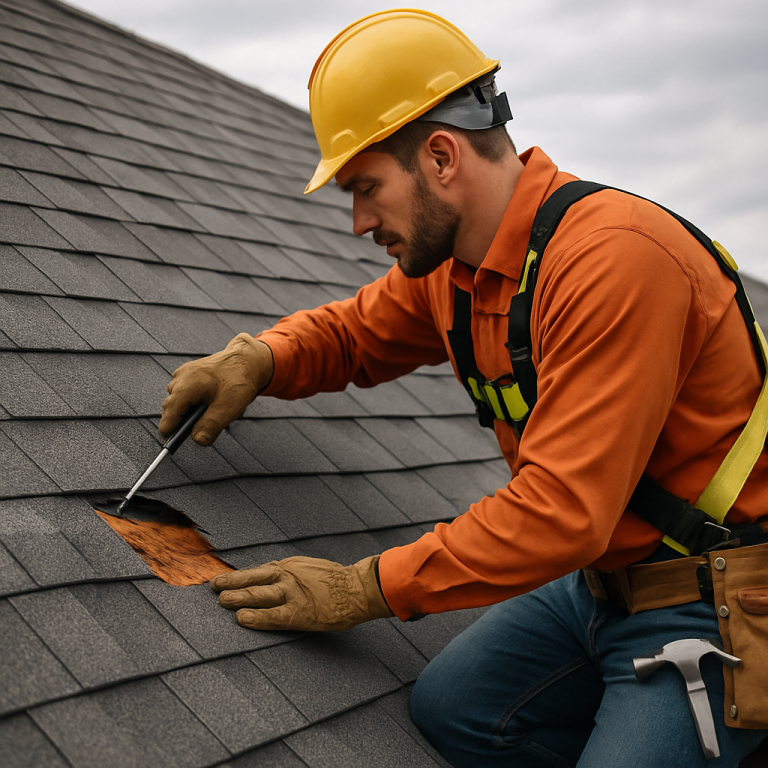
Primary mechanisms: Hurricanes damage roofs through three distinct physical actions that interact and amplify one another. Wind uplift pries shingles, membranes, and flashings off the deck. Wind-driven rain forces water past small openings and through weaknesses. Impact from airborne debris punctures or abrades coverings, creating entry points for subsequent leakage.
- Wind uplift: Local pressure differentials at eaves, ridges, and corners create suction far larger than the baseline wind speed suggests; loose or inadequately fastened edges fail first.
- Wind-driven rain infiltration: Once a seam or flashing gaps, pressurized rain is driven into the assembly and into the building within minutes during a sustained storm.
- Debris impact: Even small pieces of wood or metal at high relative velocity will tear asphalt shingles or puncture single-ply membranes, turning a maintenance problem into a structural loss.
How geometry and details concentrate failure
Key point: Roof slope, parapet configuration, and adjoining structures change where forces land and how damage propagates. Low-slope fields tend to peel at seams; steep-slope pitched areas blow off at the eave and rake. Parapets and tall adjacent walls create vortices that double or triple uplift on nearby edges.
Tradeoff to watch: Upgrading to heavier, impact-resistant shingles reduces blow-off risk but increases static and dynamic load on the deck and fasteners. If the deck or fasteners are marginal, a heavier shingle can accelerate failure rather than prevent it.
Concrete example: A three-story mixed-use building with a shallow parapet and a split roof system experienced shingle loss along the windward eave during a recent hurricane. The detached shingles then acted as projectiles, puncturing the adjacent TPO membrane. The practical repair was staged: reinforce and reattach perimeter sheathing, install Miami-Dade approved high-wind shingles on pitched sections, and apply a silicone coating to the low-slope membrane after seam repairs. See roof coatings and roof replacement for approaches we use in these cases.
What people miss: Material ratings alone do not guarantee performance. Wind uplift failures are usually an attachment or detail problem first, material problem second. Asking for hurricane resistant roof shingles without inspecting deck fastener spacing, perimeter blocking, and flashing condition is a common and costly mistake.
Engineering reality: Dynamic pressure grows with the square of wind speed, so a modest increase in design wind creates disproportionately larger uplift forces. That is why specifying higher wind-rated products and upgrading attachment details often provides better resilience per dollar than upsizing material alone. For technical guidance, consult FEMA mitigation bulletins.
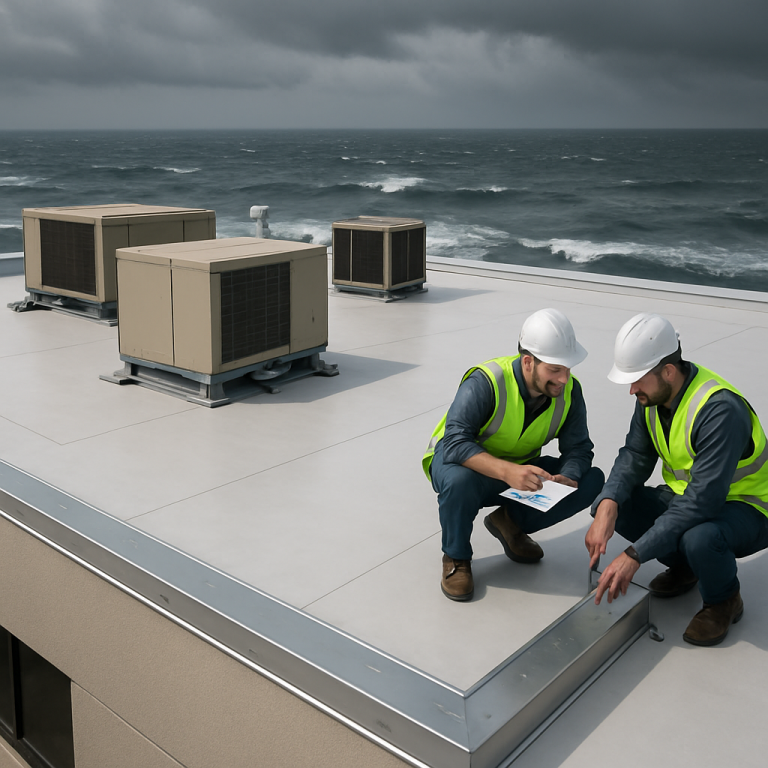
Next consideration: When commissioning an assessment, ask the inspector to test fastener pull resistance at the perimeter, inspect parapet anchorage, and document any debris impact. Those three items reveal whether hurricane resistant roof shingles, a coating, or a combined intervention will actually stop progressive failure.
Hurricane-Resistant Roof Shingles: Technology, Standards, and Real Product Examples
Quick assertion: Buying hurricane resistant roof shingles is only half the job — the other half is the assembly and proof of installation. Performance is delivered by specific construction details as much as by the shingle mat itself.
Technology and standards that matter
Key technical levers: Manufacturers achieve higher wind and impact performance by reinforcing three elements: the nailing zone and fastener specification, denser mat and binder chemistry (for tear resistance), and impact-modified surfacing for Class 4 ratings. Look for products tested under ASTM D7158 or ASTM D3161 for wind resistance and UL 2218 for impact resistance.
- Nailing and attachment: Installation instructions that specify ring-shank nails, increased nail count at eaves/rakes, and perimeter blocking are required to realize published wind ratings.
- System approach: Rated wind performance assumes compatible underlayment, starter strip, and flashing details; a shingle out of context rarely meets the same numbers.
- Approvals: In coastal jurisdictions insist on a Miami-Dade County Product Approval number or equivalent listing — insurers and code officials will look for it.
Real product examples and practical installation notes
| Product | Notable feature | Practical installation note |
|---|---|---|
| GAF Timberline (high-wind options) | Architectural look with high-wind rated assemblies | Requires enhanced starter and specified ring-shank nails; check Miami-Dade listing |
| Owens Corning Duration Storm | Engineered adhesive and reinforced nailing area | Manufacturer prescribes 6-nail patterns for certain slopes and exposures |
| CertainTeed Landmark PRO | Heavy-duty laminated shingle with Class 4 impact options | Heavier weight — verify deck and fastener capacity before upsizing |
| CertainTeed Presidential | Premium dimensional shingle for severe-exposure locations | Often paired with upgraded underlayment and hip/ridge systems for full assembly compliance |
Limitation worth calling out: Upsizing to a heavier, impact-rated shingle reduces blow-off risk but increases dead load and cyclic loading on the deck and fasteners. If the substrate or fastener pattern is marginal, the retrofit can transfer failure to the deck or parapet unless those elements are reinforced.
Concrete example: A waterfront condominium replaced aged three-tab shingles with a Miami-Dade approved architectural shingle and followed the manufacturer 6-nail pattern at eaves. The contractor also installed a self-adhering underlayment along perimeter zones. When a hurricane produced sustained gusts over 100 mph, the complex lost minimal coverage and the owner had the installation documentation necessary for a successful insurance claim.
Practical judgment: For commercial owners, specifying hurricane resistant roof shingles without demanding assembly documentation and post-installation evidence is a common waste. Spend the extra time on contractual performance language: list the product approval numbers, nail type and spacing, underlayment model, and require photos and a final inspection report as deliverables.
Next action: When evaluating bids, compare not only product names but the documented assembly and acceptance criteria. If you want help verifying approvals and test records, start with a roof survey and documented installation checklist — see our roof replacement services for examples of what to request from contractors.
Commercial Roof Coatings: Chemistries, Applications, and Product Examples
Bottom line: On commercial low-slope roofs the coating chemistry is the deciding factor between a durable, storm-ready overlay and a short-lived cosmetic touch-up. Compatibility, surface preparation, and ponding behavior determine real-world performance far more than the marketing name on the can.
Chemistries and where they make sense
Silicone: Superior for ponding water and UV resistance; adheres well to many single-ply membranes and aged bitumen when surfaces are dry. Acrylic: Lower cost, good for sloped, well-drained roofs but loses adhesion under persistent ponding. Polyurethane: Tough, abrasion resistant; used where traffic or mechanical wear is expected but some formulations yellow with UV unless top-coated. Asphalt-based emulsions: Cheap and temporary, useful for small repairs but not a long-term hurricane strategy.
| Chemistry | Best-fit application | Key limitation | Representative commercial product families |
|---|---|---|---|
| Silicone | Low-slope TPO, EPDM, modified bitumen with ponding | Difficult to overcoat with some materials; requires clean, dry surface | Carlisle SynTec silicone lines; Firestone silicone coatings |
| Acrylic / Elastomeric | Well-drained built-up and single-ply roofs where reflectivity matters | Poor long-term performance in standing water | Henry Company elastomeric coatings; GAF acrylic coatings |
| Polyurethane (aliphatic) | High-wear areas; roofs with mechanical abrasion risk | Cost and UV stability unless aliphatic topcoat used | Versico specialty polyurethanes; manufacturer-specific products |
| Asphalt emulsions | Temporary patching or low-budget maintenance | Short service life and rapid UV degradation | Contractor-grade, not manufacturer long-term systems |
- Practical requirement: Always run an adhesion test in situ and document it. A sample 12 inch by 12 inch adhesion pull tells you if the coating will stick to the existing membrane or will delaminate during a storm.
- Moisture trap risk: Do not coat over roofs with suspected wet insulation or widespread seam failures. Coatings can seal moisture in, accelerate deck rot, and hide failures until after warranty periods expire.
- Warranty caveat: Manufacturer warranties are conditional. They commonly require specific primer systems, maximum allowable ponding time, and documented pre-repair of seams and flashings.
Concrete example: A distribution center with an aging TPO membrane and recurring ponding used a premium silicone system after seam repairs and localized re-sheeting. The coating stopped leakage through hairline cracks, reduced interior downtime, and qualified the owner for a reflective roof rebate. The retrofit failed on another building where the contractor coated over soft, wet insulation without infrared scanning; the coating delaminated within 18 months.
Important: coatings rarely increase wind uplift capacity of shingle or tile assemblies. Use coatings to protect membranes and reduce leakage risk; use reinforced, Miami-Dade approved shingles and improved attachment to resist uplift on pitched sections.
Performance Comparison by Roof Type and Slope
Clear reality: Roof slope and substrate determine which mitigation actually reduces loss in a hurricane. On steep-slope commercial sections, hurricane resistant roof shingles plus tightened attachment and perimeter upgrades stop blow-off and shingle-driven secondary damage. On low-slope fields, durable coatings on a sound membrane reduce leaks and slow UV/ponding failure — but they do not substitute for a coded, high-wind shingle assembly where one is required.
Steep-slope (pitched) roofs
Primary recommendation: Use Miami-Dade approved, high-wind and impact-rated shingles installed as a complete assembly.** The shingle alone is moot without the specified starter strip, underlayment, ring-shank nails, and perimeter blocking called out in the manufacturer instructions.
Tradeoff to manage: Heavier, impact-modified shingles lower blow-off risk but increase static and cyclic loads on the deck and fasteners. If the substrate or fastener pattern is marginal, the retrofit can shift failure to the deck or parapet unless you reinforce those elements first. Consider edge-screw reinforcement or re-decking before upsizing shingle weight.
Low-slope and flat roofs
Primary recommendation: Prioritize membrane integrity: targeted seam repairs, flashing replacement, and then apply a compatible silicone or polyurethane coating where adhesion tests show good pull strength.** Coatings extend service life, reduce leakage, and improve reflectivity, but they only deliver when the membrane is structurally sound.
Limitation: Coating over extensive seam separation, wet insulation, or soft substrate is a failure mode we see often. Run infrared or core tests and perform a 12 inch by 12 inch adhesion pull in multiple locations before committing to a coating scope. If more than roughly 20–30% of the roof requires sheet replacement, plan for partial re-roofing instead of coating.
Metal and specialty roofs
Primary recommendation: Use coatings to control corrosion and seal fasteners, but treat uplift at edges and seams as a mechanical problem.** Replace degraded clips/fasteners or convert to seam-welded details rather than relying on coatings to hold a loose panel during sustained uplift.
Practical judgment: Coatings can mask loose fasteners and hide progressive failure until after a storm. Insist on a fastener audit and torque/pull tests before coating metal panels — do not allow coatings to be a cosmetic cover for attachment problems.
Concrete example: A coastal retail strip had a pitched storefront with architectural shingles and a large rear TPO field. The best outcome was staged: first upgrade the pitched storefront to Miami-Dade approved high-wind shingles with perimeter reinforcing, then repair seams and apply a silicone coating to the TPO. Staging reduced debris risk to the membrane and produced a combination warranty acceptable to the insurer.
Key insight: Matching the fix to the roof geometry is more effective than choosing a single product across the entire building. Hybrid strategies usually deliver the best resilience per dollar.
Code, Approvals, and Insurance Considerations
Regulatory and insurer acceptance drives what actually gets installed — not marketing claims. In hurricane-prone jurisdictions the practical question is whether your chosen product and the contractor work will pass local building officials and satisfy the insurer or loss-control underwriter after a loss.
How approvals change the scope and cost
Local approvals — most commonly Florida Building Code compliance and Miami-Dade County listings in coastal areas — are often mandatory for permitting and materially influence insurer decisions. A product with a published listing coupled with evidence of correct installation reduces friction at inspection and increases the chance of an insurer accepting a claim. The trade-off is real: limiting specifications to listed, hurricane-rated materials typically raises initial cost and narrows vendor options, but it avoids retroactive rejection of a repair or upgrade after a storm.
Practical limitation: Many commercially attractive roof coatings do not carry broad Miami-Dade approvals across multiple substrates. That means a coating that performs in lab data may still be unacceptable for permitting or for FM Global-style loss control if the approval does not explicitly cover your membrane or deck assembly.
What underwriters and code officials actually want to see
- Product listing or approval: the exact approval number or listing reference for the installed product and substrate
- Assembly evidence: manufacturer installation instructions, shop drawings, and photos showing perimeter nailing/fasteners and starter courses in place
- Test and survey data: adhesion pull tests for coatings, fastener pull/torque checks at critical edges, and moisture or infrared scans for membrane work
- Warranties tied to installation: a written manufacturer or installer warranty that conditions coverage on the documented installation sequence
Insurers distinguish between high-wind, impact-rated shingle systems and coated membrane work. Expect clearer premium credits or retrofit credits for Class 4 impact or certified high-wind shingle assemblies than for generic coatings. Coatings can generate energy or maintenance credits, but they rarely substitute for insurer-required uplift protection on pitched sections.
Concrete example: A property manager for a five-story office building pursued a silicone coating on the low-slope field and a high-wind shingle upgrade on the pitched entry. Because the coating scope included documented adhesion pulls and the shingle system had manufacturer-listed wind ratings accepted by the local building official, the owner qualified for a reduced deductible from the insurer and a conditional premium credit. When a later storm caused localized damage, the owner had the approval numbers and installation photos necessary to expedite the claim.
Final judgment: chasing the cheapest product without documented approvals is a false economy in hurricane zones. Spend on documentation and the correct assembly where it matters — the perimeter, attachment, and approved product list — because that is what inspectors and insurers will use to judge whether your hurricane resistant roof shingles or coating scope succeeded.
Cost, Service Life, Maintenance, and Return on Investment
Reality check: the single biggest determinant of lifecycle cost is not the shingle or coating brand but the condition of the substrate and the quality of the installation. Spending less up front on a cheap scope that ignores deck strength, perimeter attachment, or moisture will raise total cost through repeat repairs, downtime, and higher insurance exposure.
How to think about the cost drivers
- For hurricane resistant roof shingles: tear-off and disposal, re-decking or edge reinforcement if needed, upgraded fasteners and starter courses, and premium underlayment or self-adhering products. These are the line items that move a bid from routine to hurricane-grade.
- For coatings: surface prep (cleaning, primer, adhesion tests), localized sheet replacement or seam repair, mobilization and multiple coats, and warranty add-ons tied to moisture surveys. Skimp here and the coating peels or conceals hidden failures.
- Hidden costs that matter: documentation and testing (pull tests, moisture scans), permit and approval fees when Miami-Dade or insurer approval is required, and contingency for staged work when you discover wet insulation or marginal decking.
Service-life expectations (ballpark): Miami-Dade approved, high-wind architectural shingles typically perform 25–35 years when installed as a full assembly and maintained. Premium silicone coatings often extend low-slope membrane life by 8–15 years when used on a sound substrate and recoat cycle is followed. Full membrane replacement lifespans vary 15–30 years depending on system and exposure. These ranges shift down rapidly if routine inspection and perimeter repairs are deferred.
Maintenance and scheduled investments: assign a planned maintenance budget. Expect targeted shingle-touch repairs and flashing checks after major storms and a scheduled inspection every year plus immediate post-event assessments. Coatings need documented recoat windows; silicone systems will often require a top-up or inspection at roughly the 7–12 year mark depending on UV load and foot traffic. Documented maintenance preserves warranty and insurer acceptance.
Sample ROI scenarios (practical, not theoretical)
Concrete example: a 25,000 sqft mixed warehouse with a 4,000 sqft pitched office. The owner replaced the pitched section with Miami-Dade approved high-wind shingles (perimeter reinforcement and re-decking where needed) and applied a silicone coating to the remaining TPO field after seam repairs. The combined scope cost more up front than a coating-only approach, but it avoided a full membrane replacement two years later, reduced interior downtime, and produced insurer acceptance for wind-rated assembly documentation — delivering net savings when measured over a 12-year window.
Trade-off judgment: coatings buy time and reduce leakage risk on low-slope fields and generate energy savings through reflectivity, but they rarely pay for themselves via avoided shingle failure in high-wind exposures. Spending on strengthened attachment, perimeter blocking, and verified product approvals usually yields higher resilience per dollar for pitched areas and better odds of insurer recovery after loss. See FEMA mitigation guidance and FM Global resources when valuing resilience benefits.
Action to take now: commission a diagnostic survey that includes fastener pull tests at perimeters, moisture scans across the field, and a 12×12 adhesion test for coatings. Use those results to model a 10-year cash-flow comparison between full replacement, targeted repairs plus coating, and hybrid staging.