
Building roof repair forces property managers to choose between immediate safety, temporary containment, and long term waterproofing while juggling budgets, tenants, and weather windows. This practical how to guide provides a reproducible triage matrix for prioritizing leaks, step by step emergency actions, clear pros and cons of waterproofing methods, and contractor and documentation checklists you can use on site. Follow the ready KPIs and maintenance calendar to turn reactive fixes into predictable lifecycle decisions that protect occupancy and control long term costs.
Assess immediate safety hazards and execute emergency response
First action: isolate human risk. When you arrive, stop treating the roof problem as a maintenance ticket and treat it as a safety incident until proven otherwise. Secure rooftop edges and any interior areas under active water intrusion, put up barriers, post signage, and remove or protect critical equipment in the path of leaking water.
- On arrival – rapid checklist: Establish scene control, verify utilities and electrical hazards, note fall protection needs, and confirm occupant exposure.
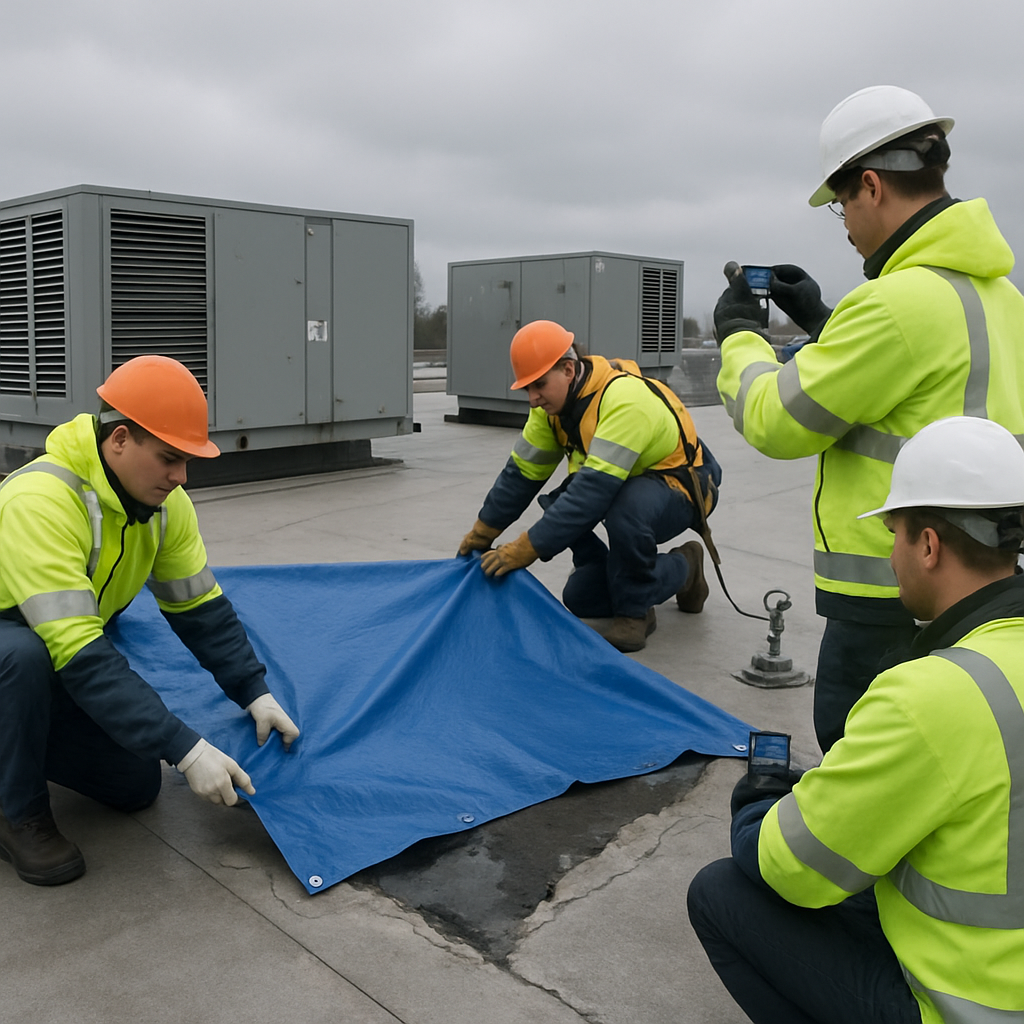
- Containment: Deploy pumps, wet vacs, and temporary drip pans inside; install a roof tarp or temporary flashing over the leak source outside when safe to access.
- Stabilize rooftop hazards: Secure loose HVAC units, brace unstable skylights, and remove or mark ponding that could cause sudden membrane failure.
- Record everything: Time stamped photos and short video of the roof field, interiors, and any temporary work plus a written incident note.
- Call for authorized trades: Engage qualified roofers for emergency roof repair and a licensed electrician if water is near electrical gear.
Practical limitation: Temporary emergency measures limit further damage but are not waterproofing solutions. Tarps and emergency sealants buy time and reduce tenant disruption, but they can trap moisture under membranes and void manufacturer warranties if left in place too long. Always pair an emergency action with a documented deadline for permanent repair.
Photo log and incident entry example
| Timestamp | Location | Observed condition | Immediate action | Photo ID |
|---|---|---|---|---|
| 2026-03-10 09:12 | Roof level 4 – north parapet near unit A/C #3 | Active leak into ceiling tile grid above server room. Roof membrane torn approx 18 in. | Installed 20 x 25 tarp anchored with sand bags. Server racks moved to dry area. Emergency roofer called. | IMG_00123 |
| 2026-03-10 09:30 | Server room interior | Standing water 2 in depth under south rack. Ceiling tile wet and sagging. | Extracted 50 gallons with wet vac. Placed containment tubs and dehumidifier. Notified IT and insurance. | IMG_00124 |
Concrete Example: In a mixed use building, an inspector found a leaking skylight above a daycare area. The team cordoned off the playroom, removed toys and bedding, set containment under the leak, and installed a secured tarp around the skylight. They logged all actions, obtained a same day emergency roof repair estimate, and scheduled permanent flashing replacement within five days to avoid prolonged disruption.
Key point: Treat leaks that threaten occupants or critical equipment as same day emergencies and document every temporary fix with a target date for permanent repair.
Judgment call that matters: Never assume the visible leak shows the source. Water travels; the patch you see may be downstream. Prioritize stopping the flow into occupied spaces and preserving evidence for insurance before attempting source repairs. Your next step is to assign a responsible party and a firm deadline for permanent work so the temporary fix does not become the default.
Frequently Asked Questions
How fast must I act when I see water stains in occupied spaces?
Short answer: act immediately for occupant safety and equipment protection. Start containment and documentation the same day and set a deadline for a permanent fix within one week unless the triage score forces same day replacement work.
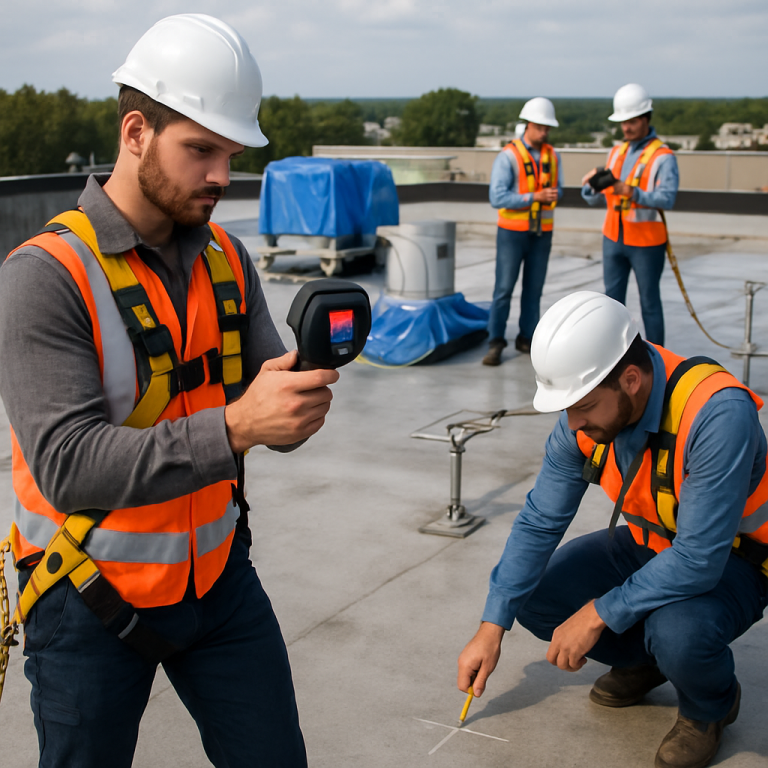
Practical consideration: spot stains often understate source complexity. Prioritize stopping water into the space and protecting critical systems, then open a diagnostic window for source tracing with a moisture meter or thermal scan before committing to a permanent method.
When is a roof coating a sensible alternative to full replacement?
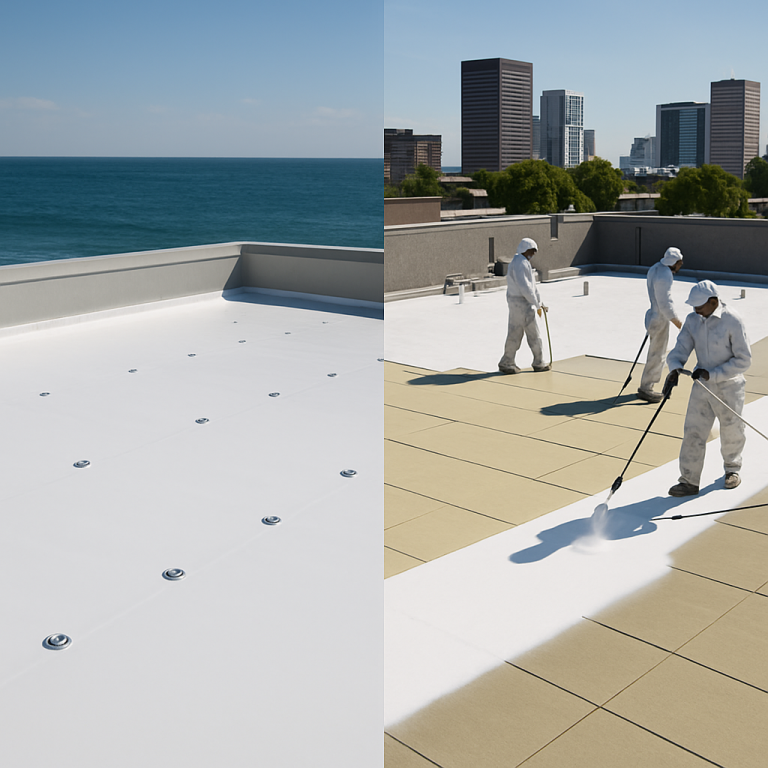
Answer: coatings work when the roof field is structurally sound, insulation is dry, flashings are serviceable, and defects are local and repairable. Use coatings to extend service life, not as a bandage for widespread membrane failure.
Trade-off to watch: coatings can hide or trap moisture. Always require nondestructive moisture testing before specifying a coating system; if testing shows wet insulation or delamination, replacement will be the only durable choice.
What paperwork do insurers typically need for a roof damage claim?
Typical packet: dated photo log, inspection narrative, contractor estimate with line items, and receipts for emergency measures. Include manufacturer data sheets if you claim product failure and a clear timeline of mitigation actions.
Field tip: present a single PDF organized by date. Claims move faster when photos are labeled, actions are time stamped, and emergency work is shown as mitigation rather than permanent repair.
Which contractor qualifications are non negotiable for waterproofing work?
Must-haves: current liability and workers compensation insurance, operating license for your jurisdiction, and manufacturer applicator authorization for the chosen system. Ask for recent project photos and a contactable reference from a similar building type.
Judgment call: a low bid without documented applicator credentials or a site-specific safety plan is a red flag. Price is not the only risk; poor installation is where most waterproofing failures start.
How do I balance a quick fix with long term waterproofing performance?
Framework: separate actions into mitigation, diagnosis, and permanent scope. Mitigation reduces immediate harm; diagnosis identifies true failure modes; permanent scope restores lifecycle performance. Never skip diagnosis before specifying a permanent method.
Concrete example: a property manager put a patch over a slow leak on an asphalt built-up roof to stop interior staining. Moisture testing done two weeks later revealed saturated insulation across a larger area, forcing a partial replacement that would have been cheaper to plan earlier than repeated patches.
How often should I arrange proactive roof inspections?
Baseline cadence: annual inspections for most commercial roofs and twice-yearly checks for roofs older than a decade or with previous repairs. Add inspections after any severe weather event or roof contractor work.
Practical add-on: supplement visual checks with periodic drone surveys and moisture scans to catch subsurface problems before they drive emergency repairs.
Key takeaway: document every temporary action with photos and a firm deadline for permanent repair; mitigation without a plan becomes a liability.
- Immediate steps you can take now: 1) Start a dated photo log for any active leak; 2) Order a moisture scan if the problem is larger than a single localized seam or flashing; 3) Demand a manufacturer-authorized repair proposal that separates emergency work from the permanent scope.