
In Biloxi salt air, hurricanes, and persistent ponding water make ordinary roof work twice as unforgiving, so choosing competent biloxi roofers is the difference between a short term patch and a durable waterproofing solution. This guide shows facility managers, property owners, and realtors exactly what to demand from contractors, including diagnostics, manufacturer approved systems, measurable warranties, and contract terms that protect life cycle value. You will get practical evaluation criteria, sample procurement language, realistic cost ranges, and inspection milestones to pick roofers who stop leaks for the long term.
1. Why Biloxi Climate Changes How You Specify Waterproofing
Key point: Biloxi exposure forces specifications that prioritize corrosion resistance, wind uplift performance, and moisture diagnostics over lowest first cost. Coastal salt, repeating severe storms, and frequent ponding change which materials and installation controls actually last.
Material consequence: Salt-laden air accelerates metal and fastener corrosion, UV and thermal cycling speed membrane embrittlement, and high-intensity rainfall plus clogged drains produce chronic ponding. That combination drives three specification changes facility managers must demand: stainless or coated fasteners and metals, manufacturer-approved membranes with proven coastal track records (for example systems from Carlisle or GAF), and mandatory prework moisture surveys to avoid coating over wet insulation.
Practical tradeoff: Using stainless fasteners and upgraded flashings raises upfront cost by 10 to 30 percent compared with generic materials, but in Biloxi those components commonly double service life versus cheaper alternatives. The tradeoff is real money saved later; cheap metal components often force midcycle patching after a single major storm.
Coastal versus inland: common failure modes and what to change in specs
| Failure mode | Typical inland cause | Biloxi cause and spec response |
|---|---|---|
| Corroded flashings and fasteners | Routine moisture and age | Salt-driven corrosion; specify 304/316 stainless or high-performance coatings and check fastener pullout strength |
| Membrane seam failures | Thermal cycling and poor welding | Wind uplift plus salt abrasion; require heat-welded or high-strength seam systems and manufacturer certification |
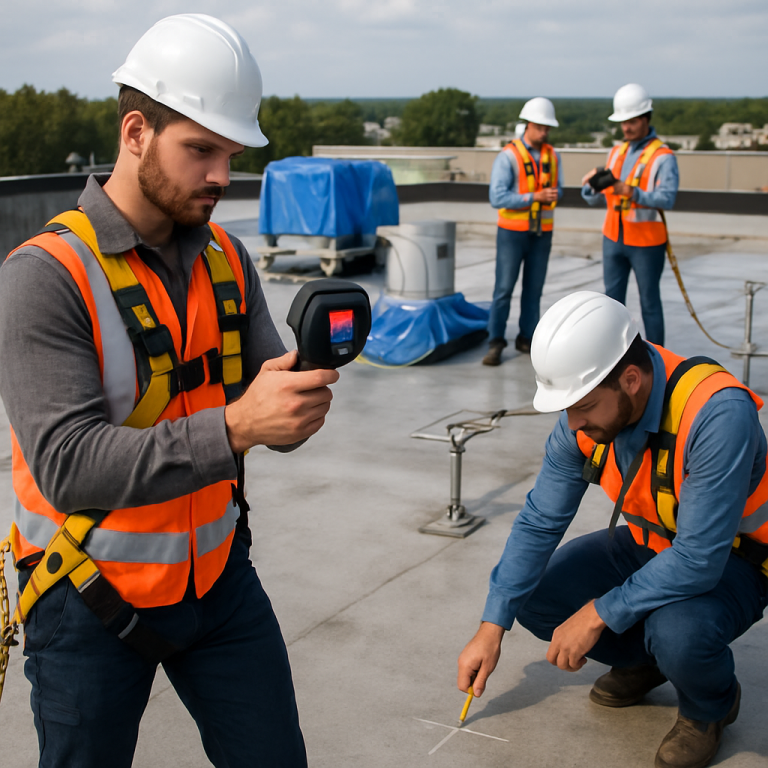
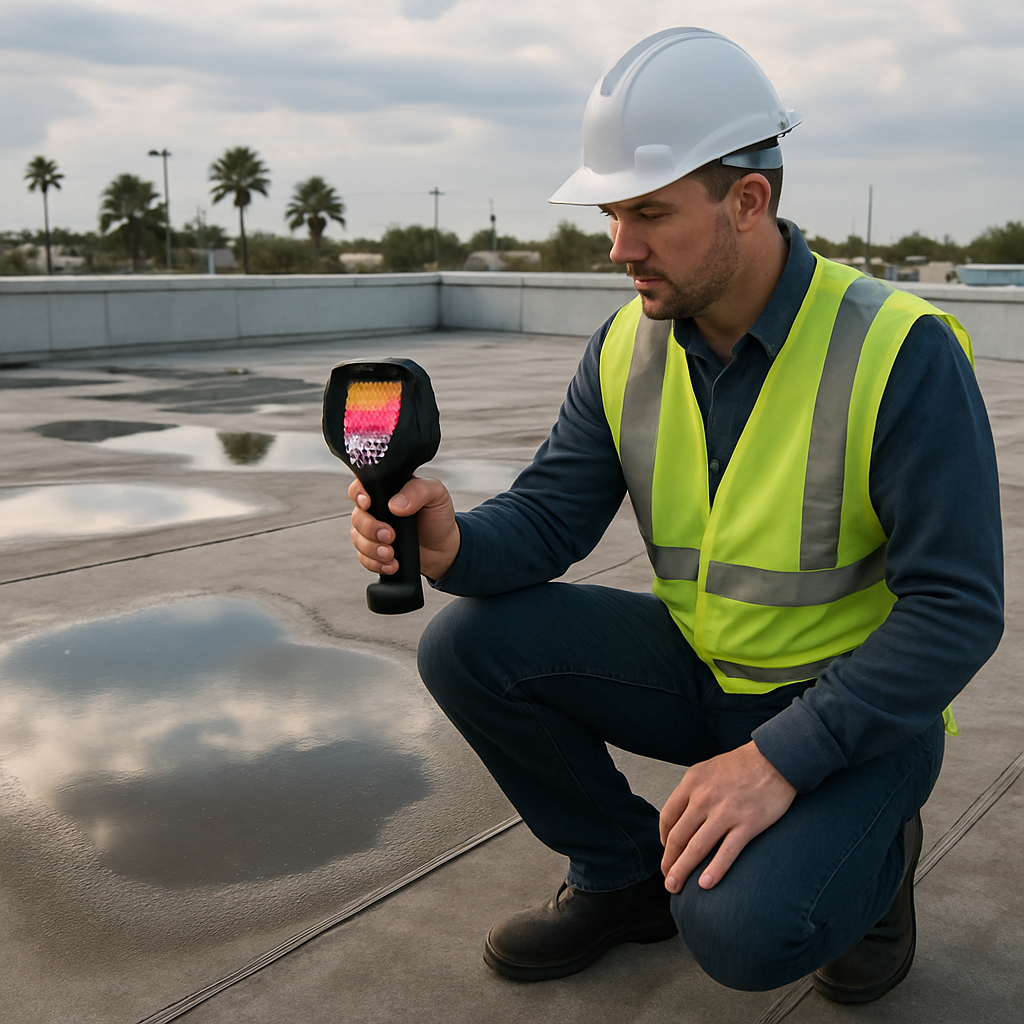
| Trapped moisture under coatings | Incomplete prep | Frequent wetting from storms; require infrared scanning and core sampling before coating and reject substrates with saturated insulation |
Concrete example: A 20,000 square foot low-slope hotel roof on the Mississippi Gulf Coast experienced repeated seam failures after three storm seasons. Infrared scans found large pockets of wet insulation under the membrane. The recommended corrective spec combined full tear-off in affected zones, replacement with a heat-welded single ply, upgraded stainless curb flashings, and added tapered insulation to eliminate ponding.
Judgment you should accept: In Biloxi, coatings without prior moisture diagnostics are an unacceptable gamble. Coatings work, but only when the substrate is demonstrably dry. Expect qualified biloxi roofers to include IR scanning and core logs in their proposals and to inflate contingency for drainage corrections.
Frequently Asked Questions
Direct point: Facility managers and owners in Biloxi ask a tight set of procurement questions about biloxi roofers; the answers below are phrased so you can copy language into an RFP or vendor interview and get useful, verifiable responses.
What does the search term biloxi roofers signal about the contractor I should hire?
Answer: It means prioritize local coastal experience and documented coastal projects over a generic low bid. Demand examples of work on properties with similar exposure – low-slope commercial, hospitality, or multifamily – and proof they handled salt-air corrosion, ponding, and wind uplift. Ask for manufacturer-backed system installs in coastal Mississippi and references you can call.
Can a coating be used to stop an active leak immediately?
Answer: A coating can mask or temporarily seal surface defects, but it will not reliably stop leaks if the substrate or insulation is wet or if flashings are compromised. The correct sequence is diagnostics, targeted repairs, then coating where appropriate. Expect a qualified biloxi roofer to refuse to coat over saturated areas until they are remediated.
Which contractor credentials should I require?
Answer: Require a valid Mississippi contractor license when applicable, current liability and workers compensation insurance, and at least one manufacturer applicator certification such as Carlisle Certified Applicator or GAF Master Select. Certification matters because it directly affects warranty access and seam performance on systems like TPO or PVC.
What prework reports should arrive with a proposal?
Answer: Insist on an infrared moisture report, core sample logs where IR indicates anomalies, and photo-documented flashing and drainage condition notes. These become part of the contractual scope so bidders price remediation realistically rather than hide contingencies until after mobilization. For diagnostic scope guidance see NRCA Technical.
How should warranty coverage be structured for best protection?
Answer: Combine a manufacturer system warranty with a contractor workmanship warranty. Require written transferability terms if the property may change ownership and specify conditions that void coverage. Be skeptical of single-party warranties from installers who cannot produce manufacturer endorsement.
When is replacement clearly preferable to waterproofing?
Answer: Replace when core sampling shows saturated insulation, multiple seam or substrate failures exist, or the deck itself is compromised. Attempting coatings over those conditions is a short-term fix that raises life cycle cost. The tradeoff is simple: coatings lower near-term expense but require strict substrate acceptance criteria to be a durable solution.
Concrete example: A three-story municipal building had persistent leak calls despite repeated patching. The winning contractor produced an IR scan showing widespread wet insulation; they removed and replaced saturated insulation, installed a heat-welded TPO in the worst bays, and applied a silicone coating on stable areas. Post-project moisture scans and a combined manufacturer/contractor warranty reduced repeat service calls to zero over the next five years.
Practical judgment: Many buyers treat certification and insurance as checkboxes and focus on price. In Biloxi, undervaluing diagnostics or coastal-rated materials almost always costs more later. Require evidence, not assertions.